Kawasaki KLE500 (2026+) Maintenance Schedule and Service Intervals

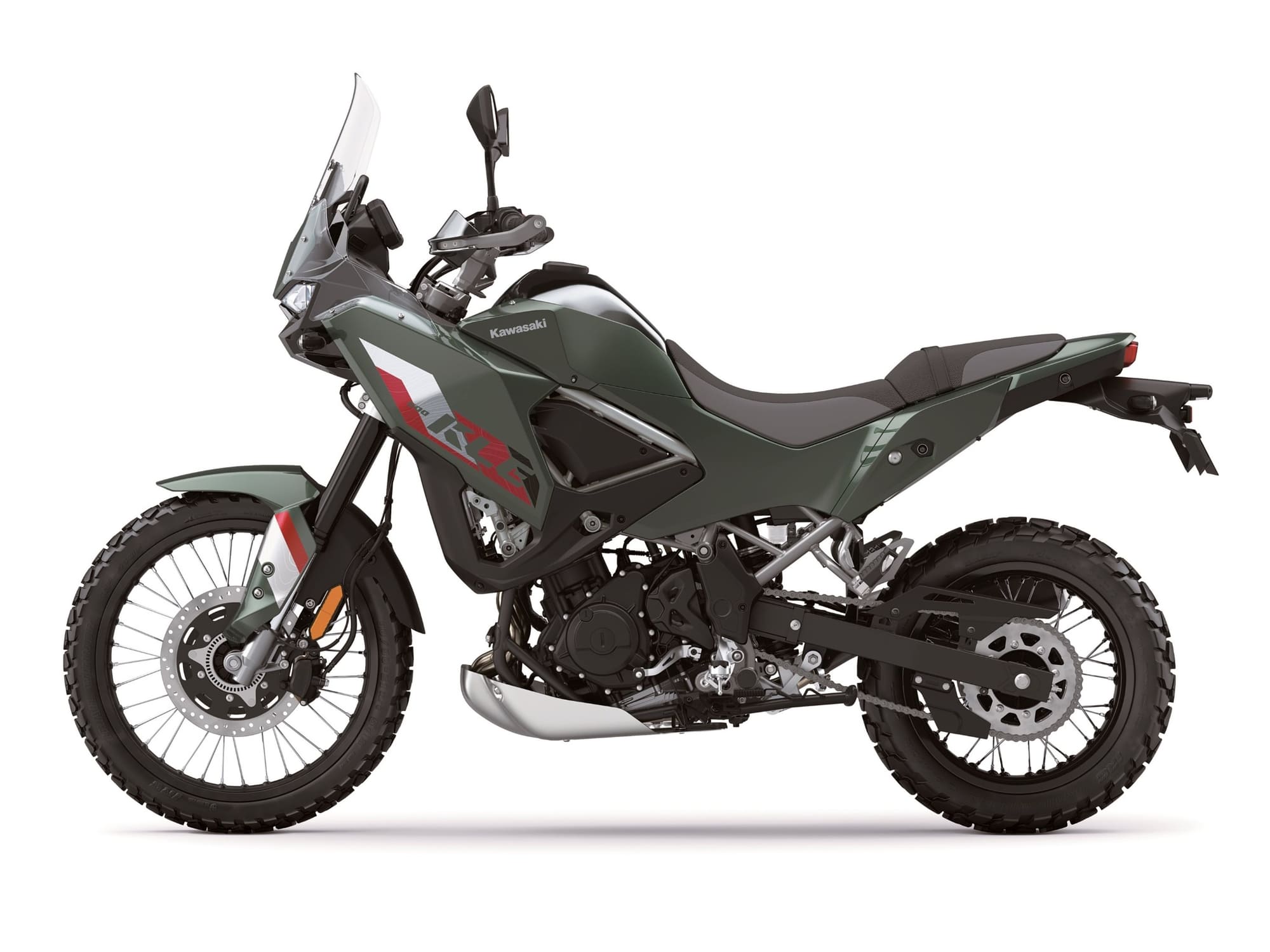
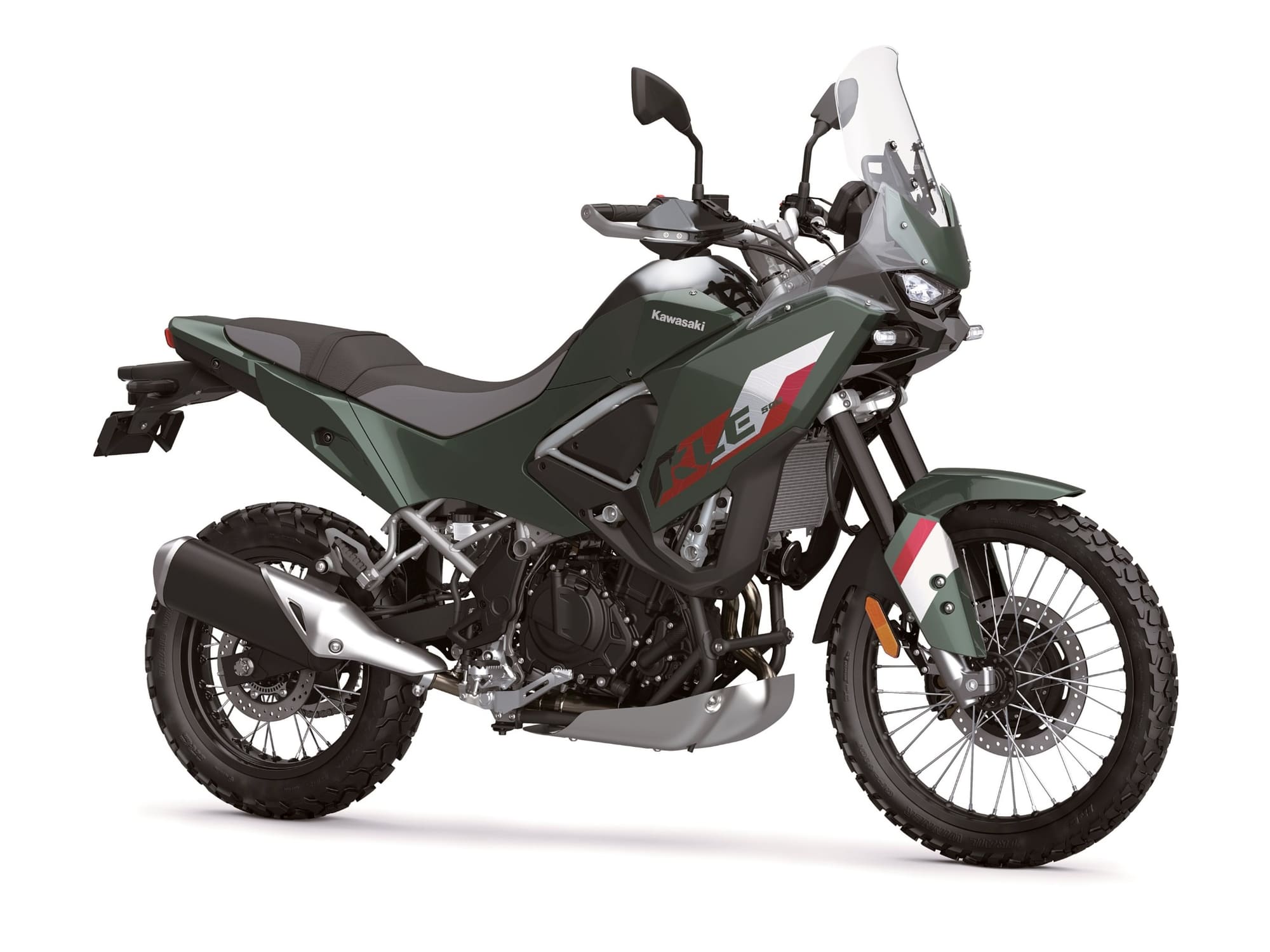
This is the complete maintenance schedule and service interval guide for the 2026-onward Kawasaki KLE500 and KLE500 SE.
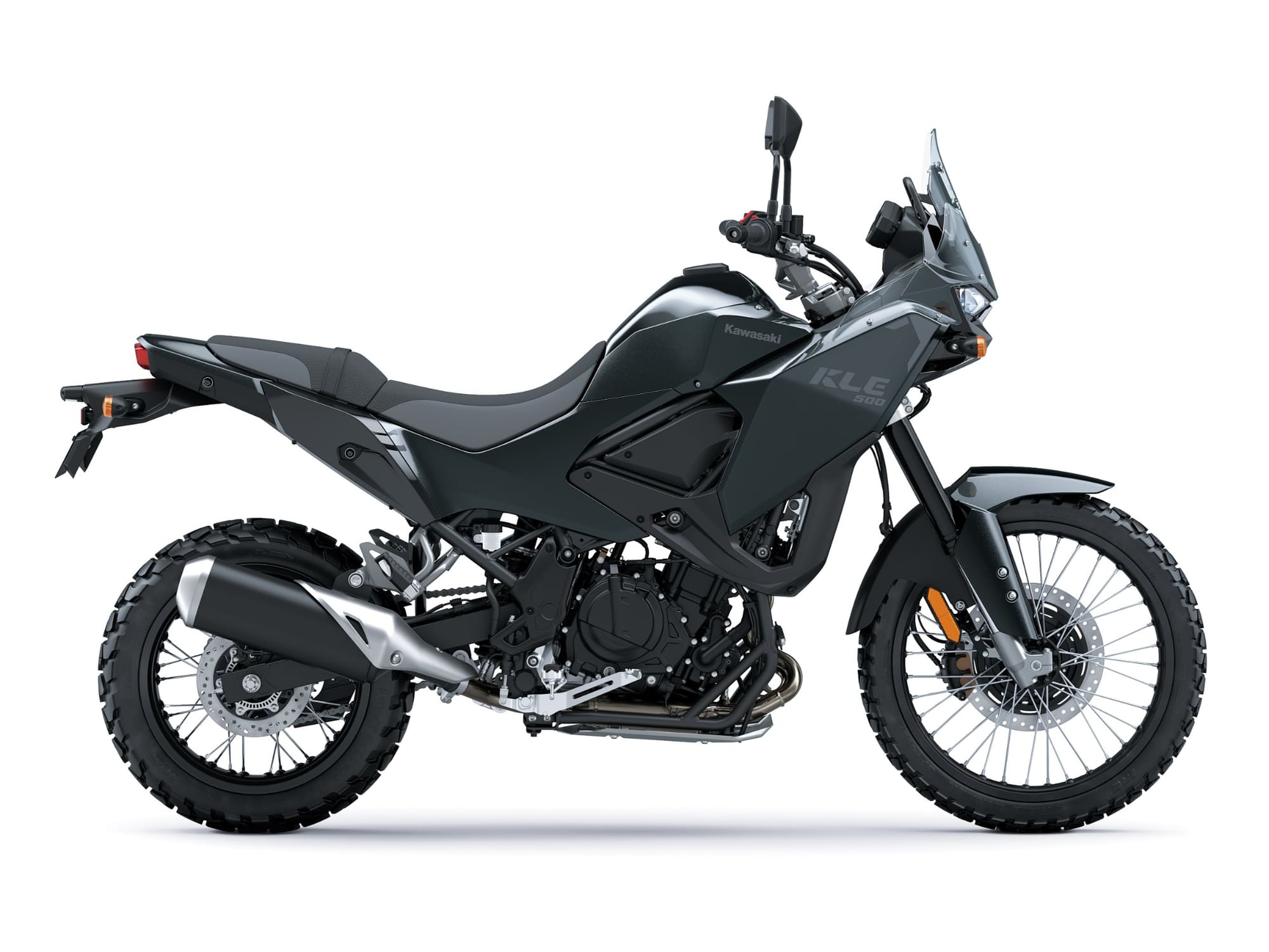
Both versions use the same 451 cc liquid-cooled parallel-twin engine, six-speed transmission, chain final drive, trellis frame, long-travel suspension, and 21-inch front / 17-inch rear spoked wheels. The SE adds touring and protection equipment, but it does not have a separate maintenance schedule.
The KLE500 shares its basic engine family with the Kawasaki Ninja 500 and Kawasaki Z500. Its routine engine schedule is therefore familiar, but the adventure chassis adds work that the street bikes do not need—most notably checking spoke tension and rim runout every 6,000 km (3,800 mi).


This site has links for things like oil and spark plugs from which we earn a commission (which unfortunately nobody can save, not even us). If you appreciate this work, then please use those links. Thanks!
Kawasaki KLE500 Service Intervals
The first scheduled service for the Kawasaki KLE500 is at 1,000 km (600 mi). After that, the main service interval is every 12,000 km (7,600 mi) or one year, whichever comes first. Change the engine oil and oil filter at every scheduled service.
Replace the spark plugs every 12,000 km (7,600 mi). Inspect the valve clearances every 24,000 km (15,200 mi), which is also when the air cleaner element and fuel filter are scheduled for replacement. Once the odometer passes 48,000 km (30,400 mi), repeat the same 12,000 km pattern.
The KLE500 has an additional 6,000 km (3,800 mi) spoke-tightness and rim-runout inspection. This interval matters because a loose spoke can transfer extra load to its neighbours, and rough or corrugated roads can accelerate loosening. Check the wheels sooner after hard trail use, heavy impacts, or any new vibration.
Kawasaki marks the air cleaner, engine oil, and drive chain as severe-use items. Service them more often if the motorcycle is regularly ridden in dust, mud, rain, deep water, heavy traffic, or sustained high-load conditions. The schedule below is the normal-use maximum, not a reason to leave contaminated oil or a dirty filter in place.
Parts needed to service the Kawasaki KLE500
The following consumables cover routine KLE500 maintenance. Exact fill quantities and service procedures should be checked in the owner’s or workshop manual for the motorcycle’s market.
| Part | Kawasaki KLE500 specification |
|---|---|
| Engine oil | SAE 10W-40 motorcycle oil meeting API SG, SH, SJ, SL, or SM and JASO MA, MA1, or MA2. Use a wet-clutch-compatible oil and confirm the level at the sight glass after running and settling the engine. |
| Oil filter | Kawasaki filter 16097-0008. The Hiflofiltro HF303 / HF303RC is a commonly available compatible alternative. |
| Spark plugs | Two NGK LMAR9G spark plugs. The scheduled replacement interval is 12,000 km (7,600 mi). |
| Air cleaner element | Kawasaki element 11013-0767. Replace at 24,000 km (15,200 mi), or earlier after dusty or wet off-road use. |
| Brake fluid | DOT 4 brake fluid. Replace front and rear fluid every two years, regardless of distance. |
| Coolant | Use an aluminium-engine-safe ethylene-glycol coolant with corrosion inhibitors. Do not mix incompatible coolant chemistries. The manual schedules coolant, water hoses, and O-rings for replacement every three years. |
| Chain cleaner and lubricant | Use cleaner suitable for a sealed motorcycle chain and a quality motorcycle chain lubricant. Clean and lubricate more often after rain, washing, mud, dust, or water crossings. |
| Grease | Use lithium soap-based grease for chassis, control, and bearing lubrication points unless the service procedure specifies otherwise. |
Kawasaki KLE500 Maintenance Schedule
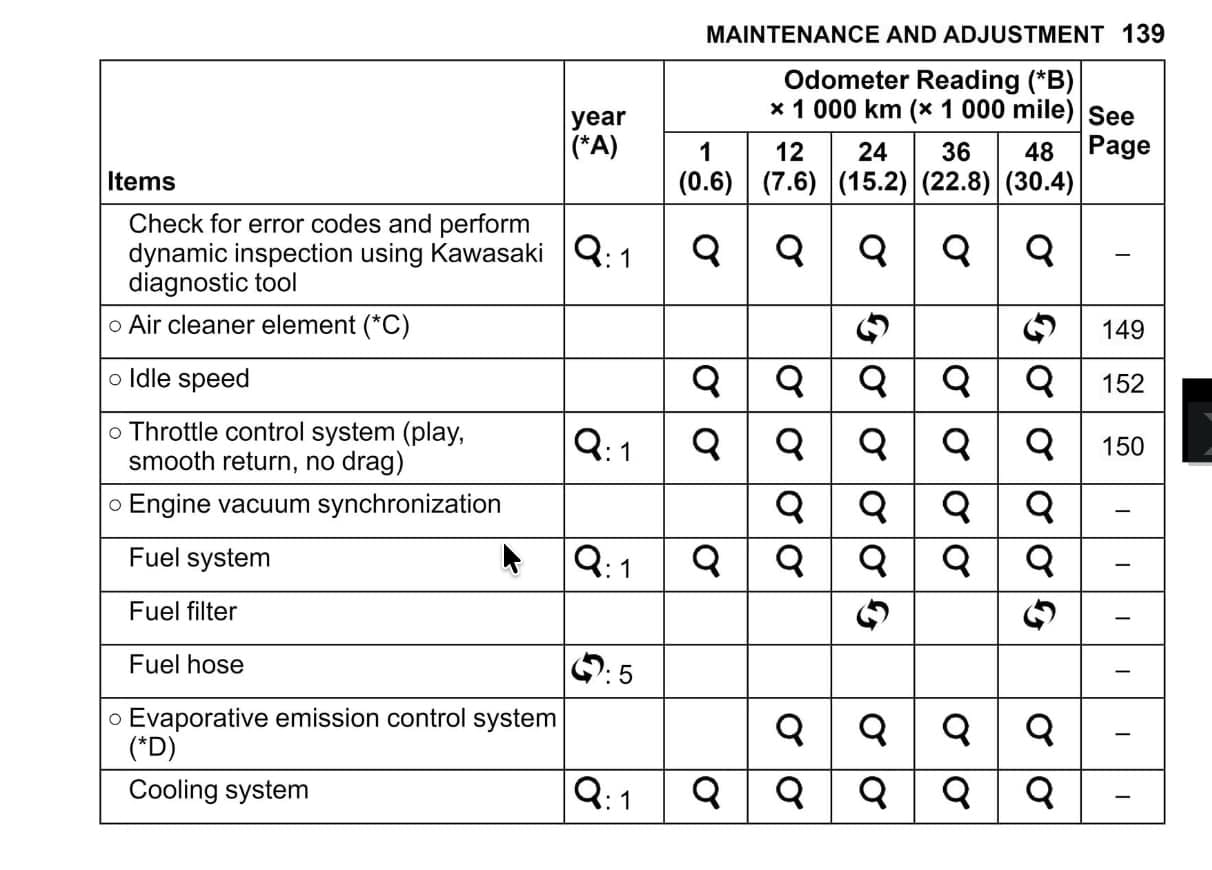
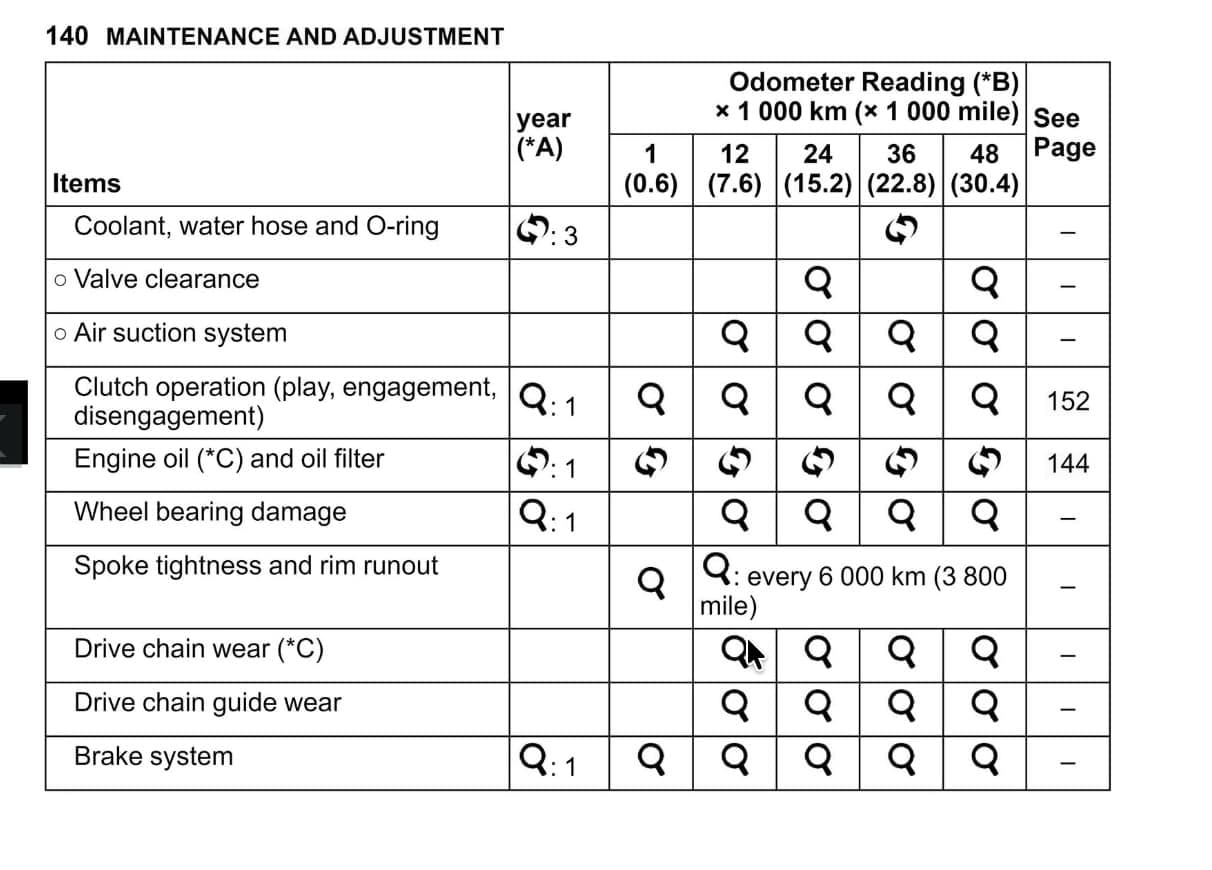
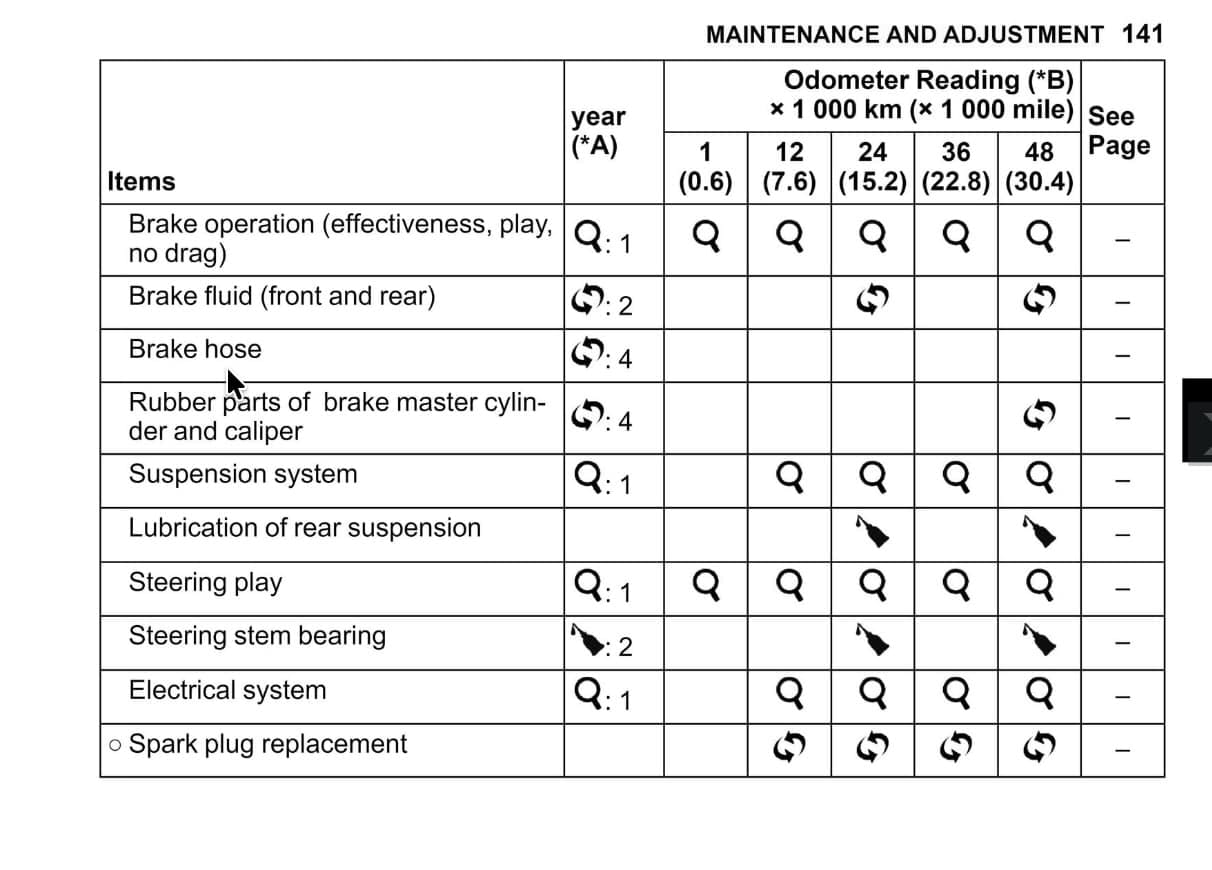
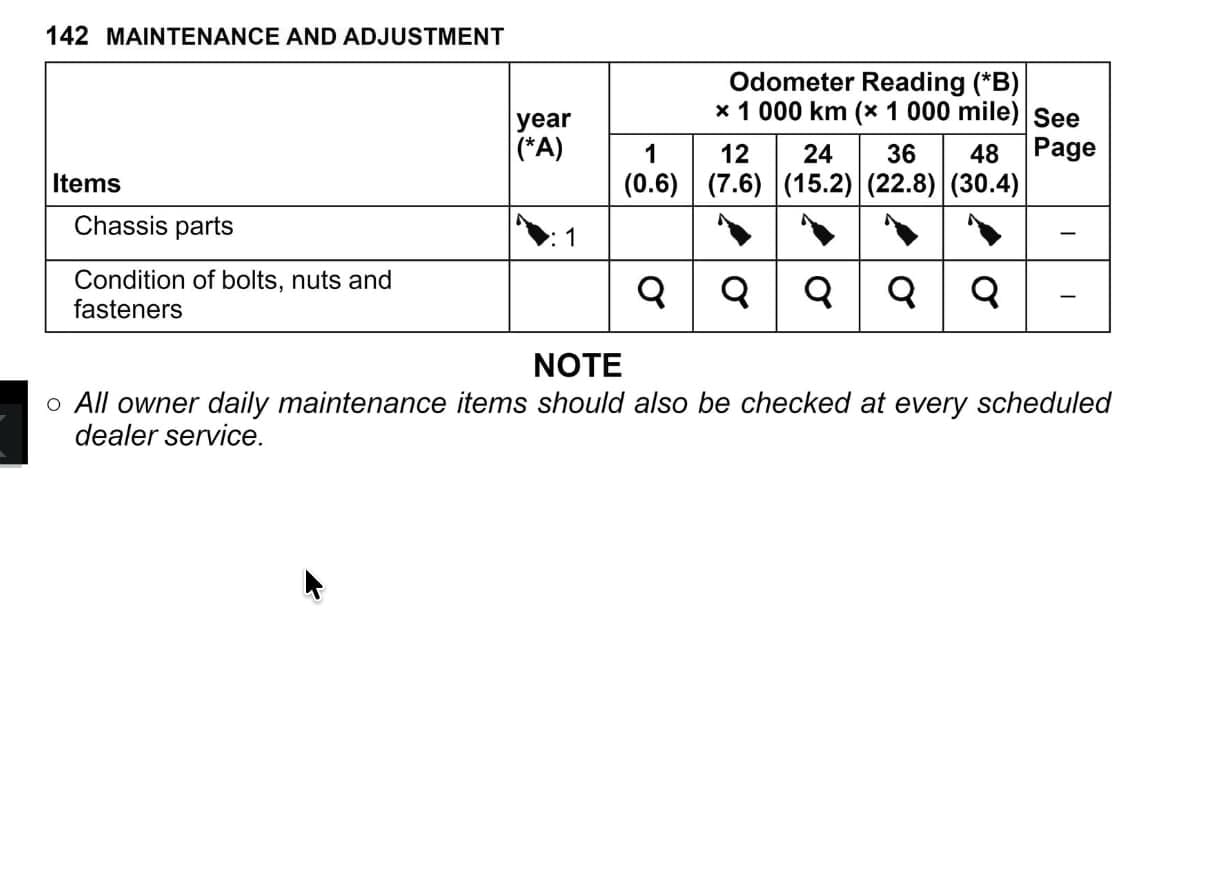
The tables below are transcribed and reorganised from the maintenance pages in the 2026 Kawasaki KLE500 owner’s manual. They apply to both the standard KLE500 and KLE500 SE.
- Inspect means check condition or operation and clean, adjust, or replace if necessary.
- Follow both the distance and time requirements, doing the work at whichever limit comes first.
- For distances beyond 48,000 km (30,400 mi), repeat the 12,000 km (7,600 mi) pattern.
- Diagnostic-tool checks and some emissions-related work may require a Kawasaki dealer or suitable equipment.
Scheduled service matrix
| km × 1,000 | 1 | 12 | 24 | 36 | 48 | Action / shorter interval |
|---|---|---|---|---|---|---|
| mi × 1,000 | 0.6 | 7.6 | 15.2 | 22.8 | 30.4 | |
| Engine oil and oil filter | R | R | R | R | R | Replace yearly or more often in severe use |
| Spark plugs | — | R | R | R | R | Replace |
| Air cleaner element | — | — | R | — | R | Replace more often in dusty, muddy, or wet conditions |
| Valve clearance | — | — | I | — | I | Inspect |
| Engine vacuum synchronisation | — | I | I | I | I | Inspect / adjust |
| Fuel filter | — | — | R | — | R | Replace |
| Evaporative emission control system, if fitted | — | I | I | I | I | Inspect |
| Air suction system | — | I | I | I | I | Inspect |
| Wheel bearings | — | I | I | I | I | Inspect for damage or play at least yearly |
| Spoke tightness and rim runout | I | I | I | I | I | Inspect every 6,000 km (3,800 mi) |
| Drive chain wear | — | I | I | I | I | Inspect more often in severe use |
| Drive chain guide wear | — | I | I | I | I | Inspect |
| Suspension system | — | I | I | I | I | Inspect at least yearly |
| Rear suspension linkage | — | — | L | — | L | Lubricate |
| Steering stem bearing | — | — | L | — | L | Lubricate every two years |
| Electrical system | — | I | I | I | I | Inspect at least yearly |
| Chassis lubrication points | — | L | L | L | L | Lubricate at least yearly |
Annual and every-service inspection
Carry out the following checks at the 1,000 km first service, at each 12,000 km service, and at least once per year unless the row says otherwise.
| Inspection item | What to check |
|---|---|
| Diagnostic system | Check stored error codes and perform the specified dynamic inspection with the Kawasaki diagnostic tool. |
| Idle speed | Check idle quality and specified speed; correct any abnormal running. |
| Throttle control system | Check play, smooth return, and that the throttle does not drag. |
| Fuel system | Inspect for leaks, damage, secure connections, and correct operation. |
| Cooling system | Inspect coolant level, hoses, connections, radiator, fan operation, and signs of leakage. |
| Clutch operation | Check lever play, engagement, disengagement, and smooth cable operation. |
| Brake system and brake operation | Check fluid levels, pads, discs, lines, controls, effectiveness, free play, and that neither brake drags. |
| Steering play | Check for free movement, correct play, and no notchiness or looseness. |
| Bolts, nuts, and fasteners | Check condition and security. Tighten to the specified torque where necessary. |
Time-based replacement and lubrication
| Item | Time interval | Action |
|---|---|---|
| Engine oil and oil filter | Every year | Replace, even if the distance interval has not been reached |
| Brake fluid, front and rear | Every 2 years | Replace |
| Steering stem bearing | Every 2 years | Lubricate |
| Coolant, water hoses, and O-rings | Every 3 years | Replace |
| Brake hoses | Every 4 years | Replace |
| Rubber parts in brake master cylinders and calipers | Every 4 years | Replace |
| Fuel hoses | Every 5 years | Replace |
KLE500 Spoke and Rim Checks
The spoke inspection is the main maintenance difference between the KLE500 and the cast-wheel Ninja 500 or Z500. Kawasaki specifies an initial check at 1,000 km (600 mi), then every 6,000 km (3,800 mi)—twice as often as the main engine-service interval.
Inspect both wheels for loose, damaged, or missing spokes, and check that the rims run true. A quick sound check can identify a spoke that has gone notably slack, but final correction should be based on the proper tension and truing procedure. Tightening one spoke changes loads elsewhere in the wheel, so do not simply tighten every nipple by feel.
Bring the check forward after a hard rim strike, long sections of corrugations, or sustained rocky riding. Also inspect the tube-type tyres, rims, and spoke beds carefully after any impact or unexplained pressure loss.
Drive Chain Maintenance
The 12,000 km table is only the formal chain-wear inspection. Chain condition, lubrication, and slack need attention much more frequently—especially on an adventure bike that may be ridden through dust, rain, mud, or water.
- Inspect the chain before long trips and after off-road riding.
- Clean and lubricate it after washing the motorcycle, riding in rain, or riding through dust and mud.
- Check for tight spots, damaged O-rings, stiff links, corrosion, hooked sprocket teeth, and wear of the chain guide.
- Measure and adjust slack using the figures and method in the owner’s manual supplied with the motorcycle. Do not copy a slack figure from the Ninja 500 or Z500—the KLE has different suspension travel and chain geometry.
About the Kawasaki KLE500
Kawasaki revived the KLE500 name for 2026 on an all-new middleweight adventure motorcycle. The new bike is powered by a fuel-injected 451 cc DOHC parallel twin, with a six-speed transmission and assist-and-slipper clutch. The engine is related to the unit in the Ninja 500, Z500, and Eliminator, which explains the shared 12,000 km service rhythm and 24,000 km valve-clearance interval.
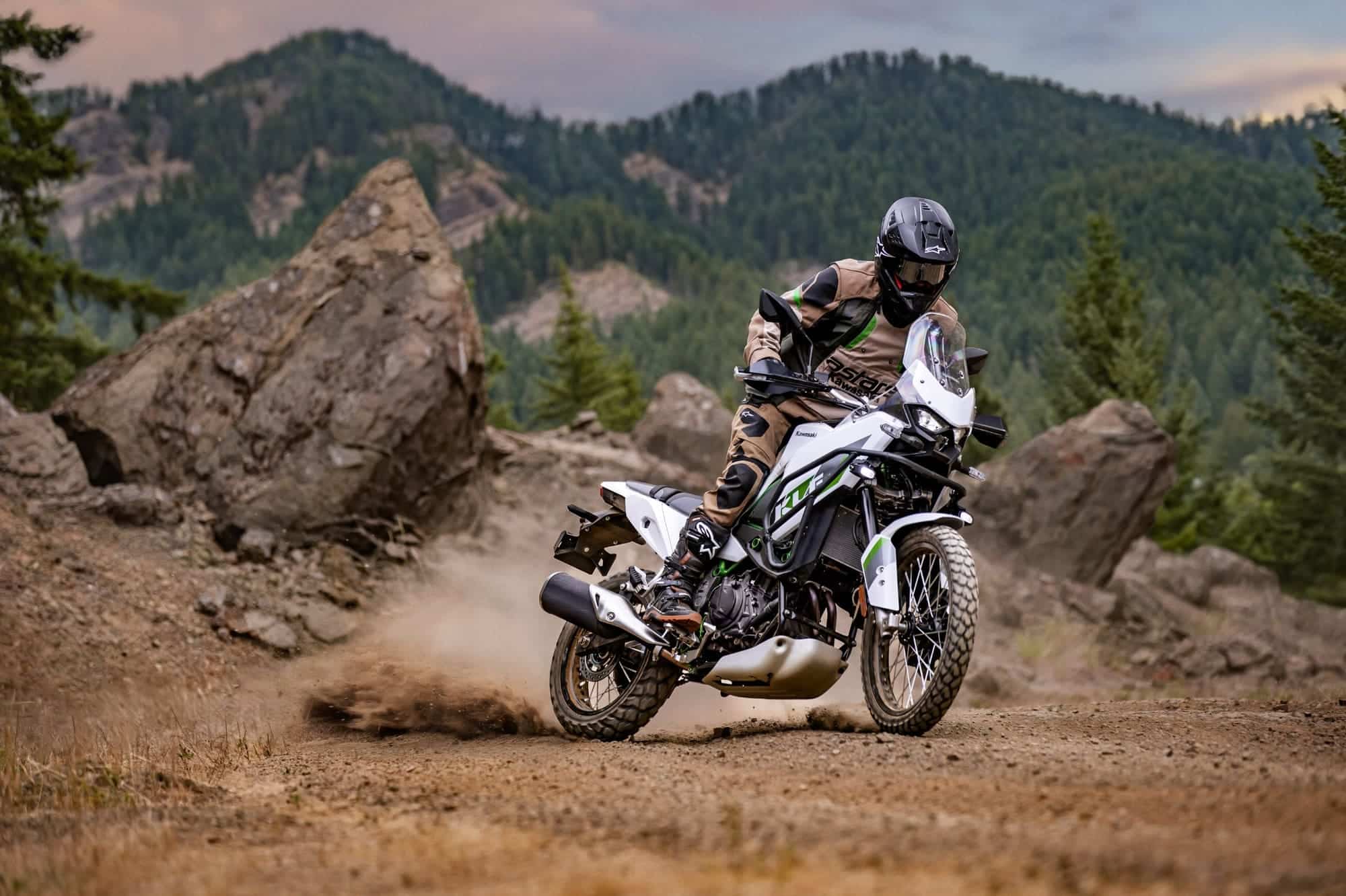
The rest of the motorcycle is purpose-built for mixed-surface riding. The KLE uses a steel trellis frame, a 43 mm inverted fork with 210 mm of travel, a linkage rear suspension with 196 mm of travel, and spoked 21-inch front and 17-inch rear wheels. Those long-travel components and spokes are why chassis inspections deserve more attention than on the road-focused engine siblings.
The standard KLE500 and KLE500 SE share the mechanical schedule in this article. The SE’s colour TFT display, taller adjustable windscreen, handguards, and larger aluminium skid plate do not change oil, valve, plug, filter, chain, or wheel intervals. Accessory luggage and regular two-up use do make suspension, fastener, tyre, and spoke checks more important.
In the current small-adventure class, the KLE500 sits between the road-biased Honda NX500 and the more dirt-focused CFMOTO 450MT. The Kawasaki’s maintenance intervals are relatively generous, but its spoked wheels, tube-type tyres, exposed chain, and off-road use add regular condition checks that do not show up as simple oil-change rows.
For a road-only KLE500, following the normal schedule and annual checklist covers the main work. For a motorcycle used as intended on unsealed roads, treat the manual’s distance intervals as maximums. Dust, water, impacts, and vibration—not just the odometer—decide when the air filter, chain, spokes, fasteners, and chassis need attention.
References — Screenshots from the Kawasaki KLE500 Owner’s Manual
The maintenance schedule above was sourced from the 2026 Kawasaki KLE500 owner’s manual. The reference gallery is arranged in source order: manual cover, then maintenance pages 139, 140, 141, and 142.


Kawasaki owner’s manuals can be searched in the official Kawasaki Technical Information Viewer. Always follow the manual supplied for the motorcycle’s market if it differs from this schedule.