2026 Triumph Thruxton 400 Maintenance Schedule and Service Intervals

This is the maintenance schedule and service intervals for the 2026 Triumph Thruxton 400, one of Triumph’s new models in its beginner-friendly, stylish, and popular 400 single-cylinder range.
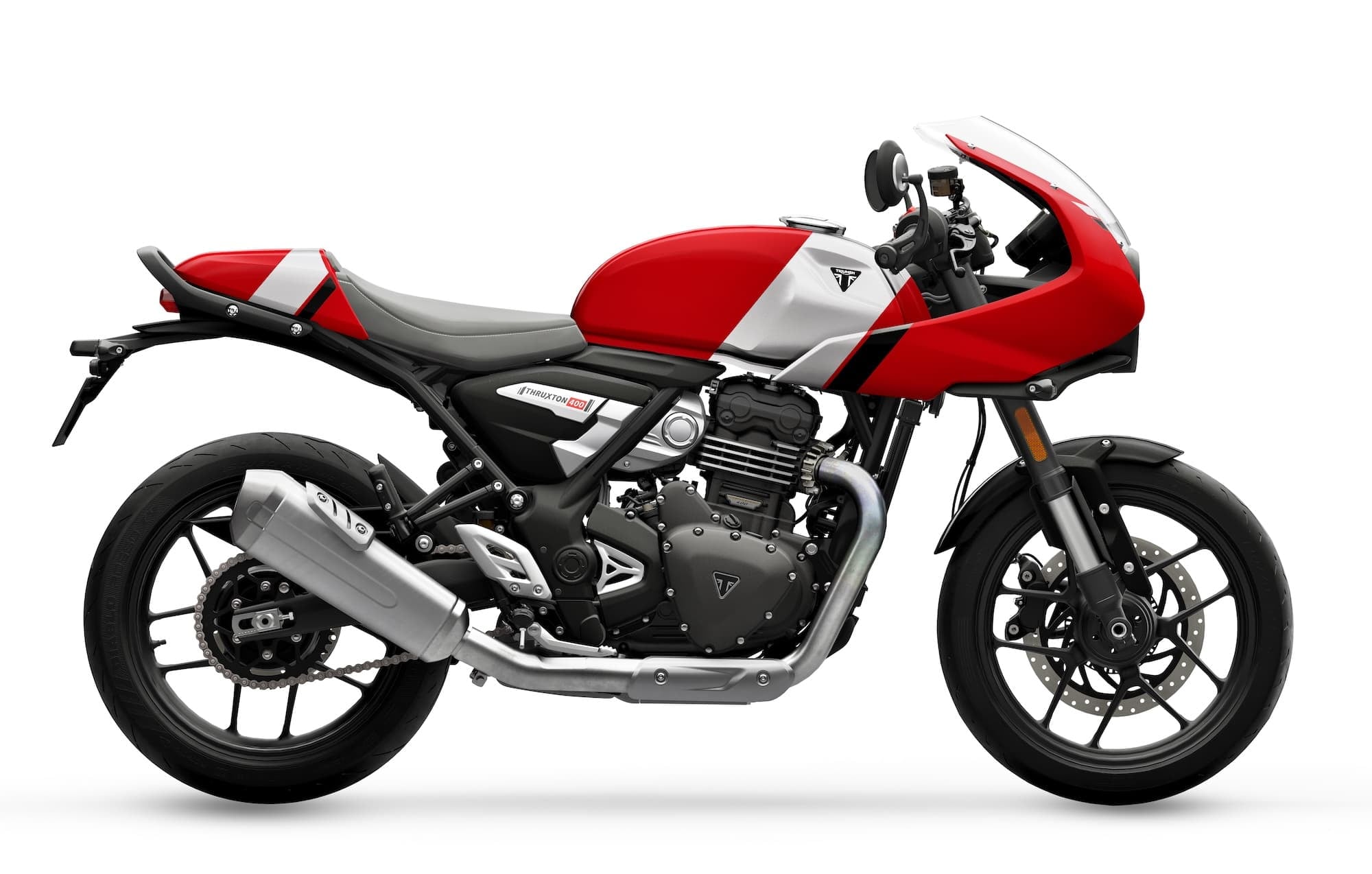
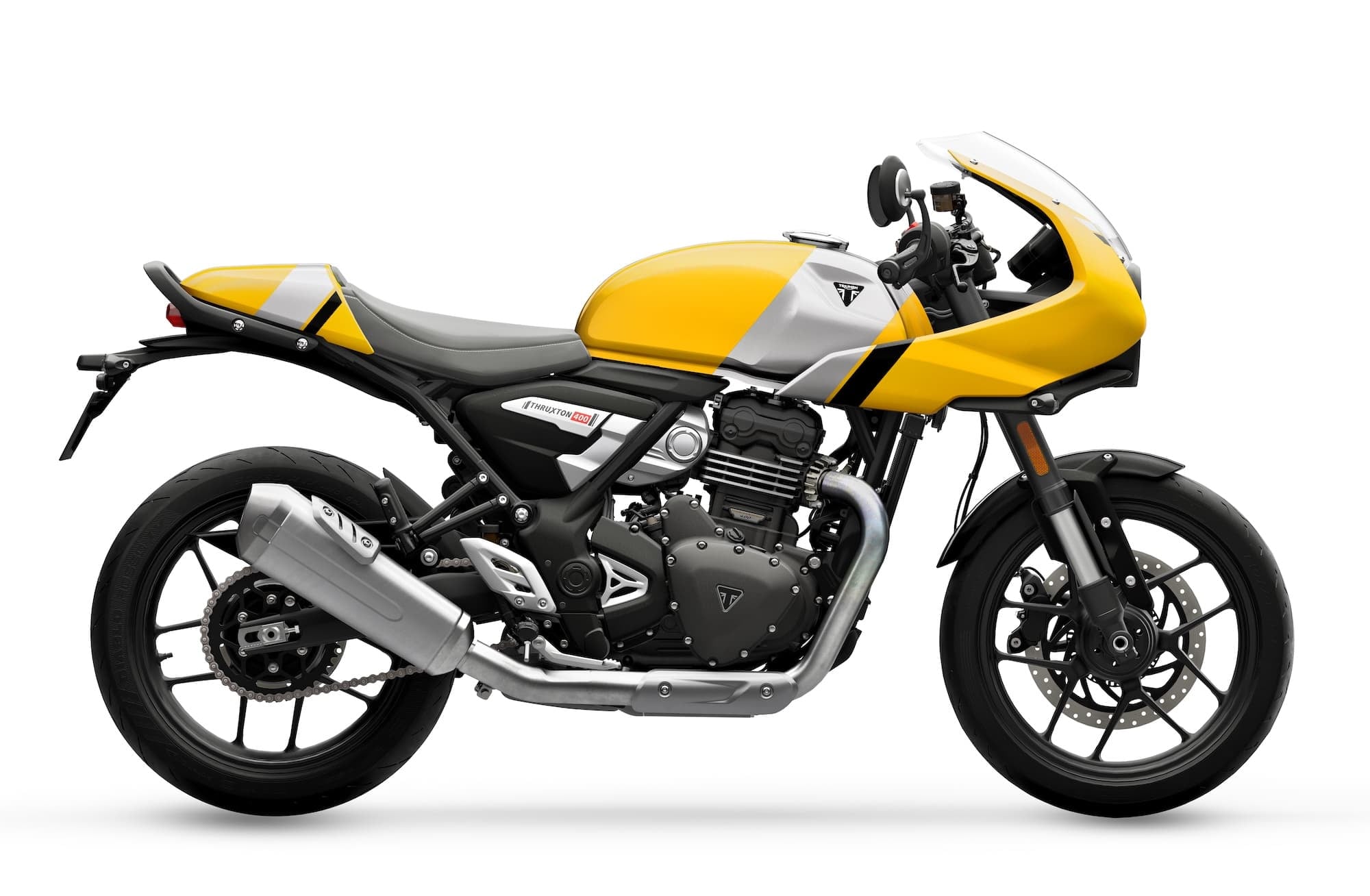
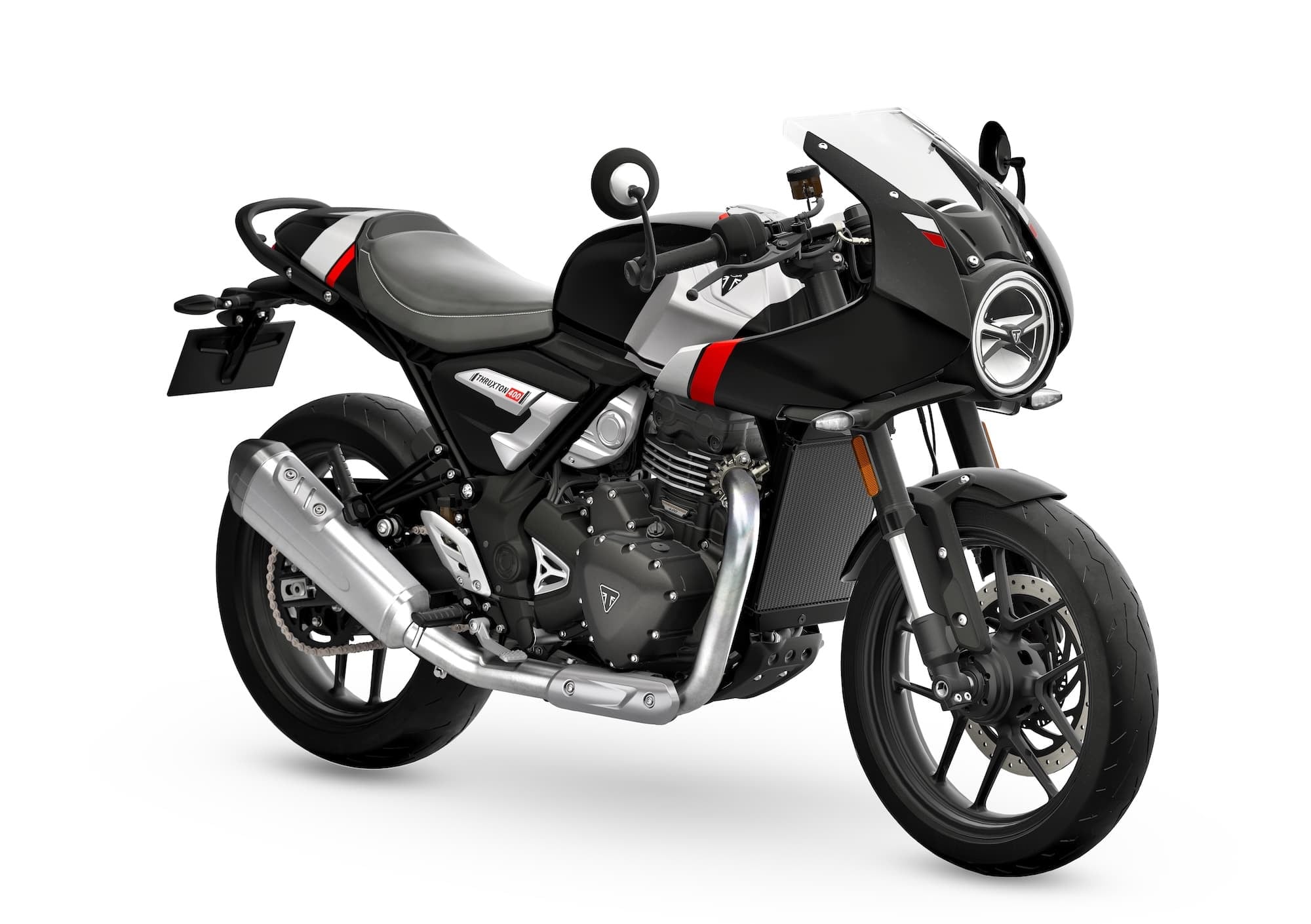
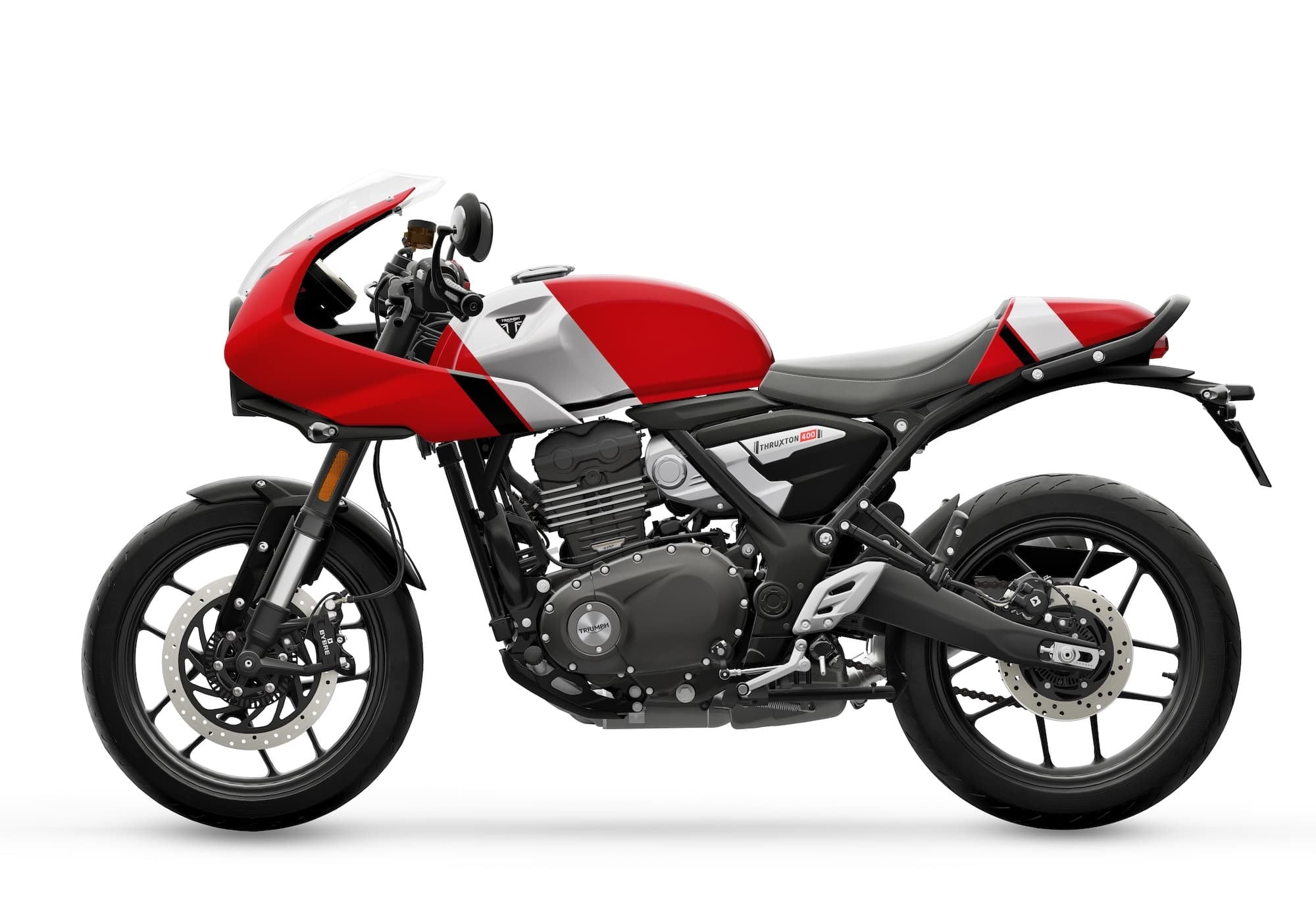
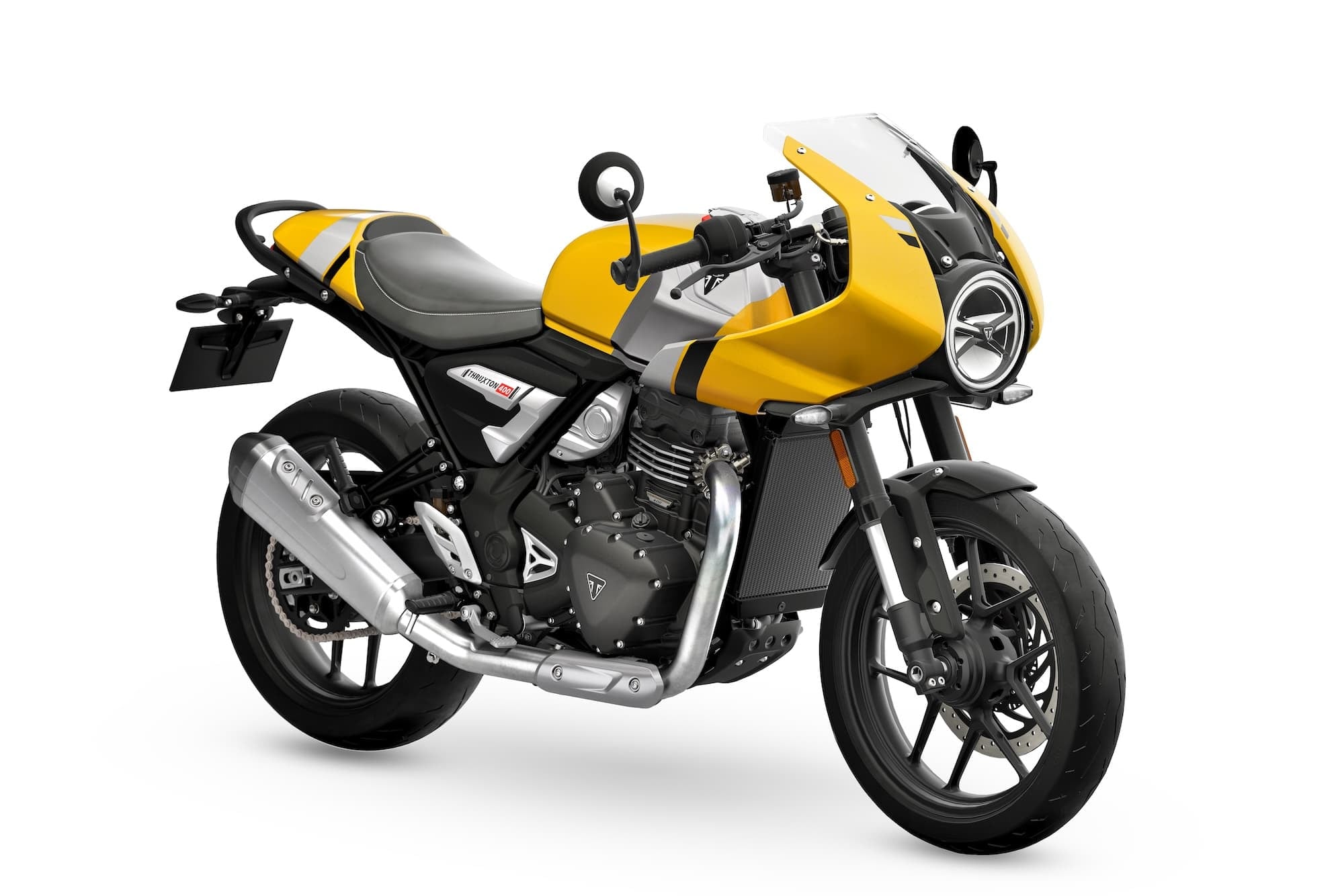
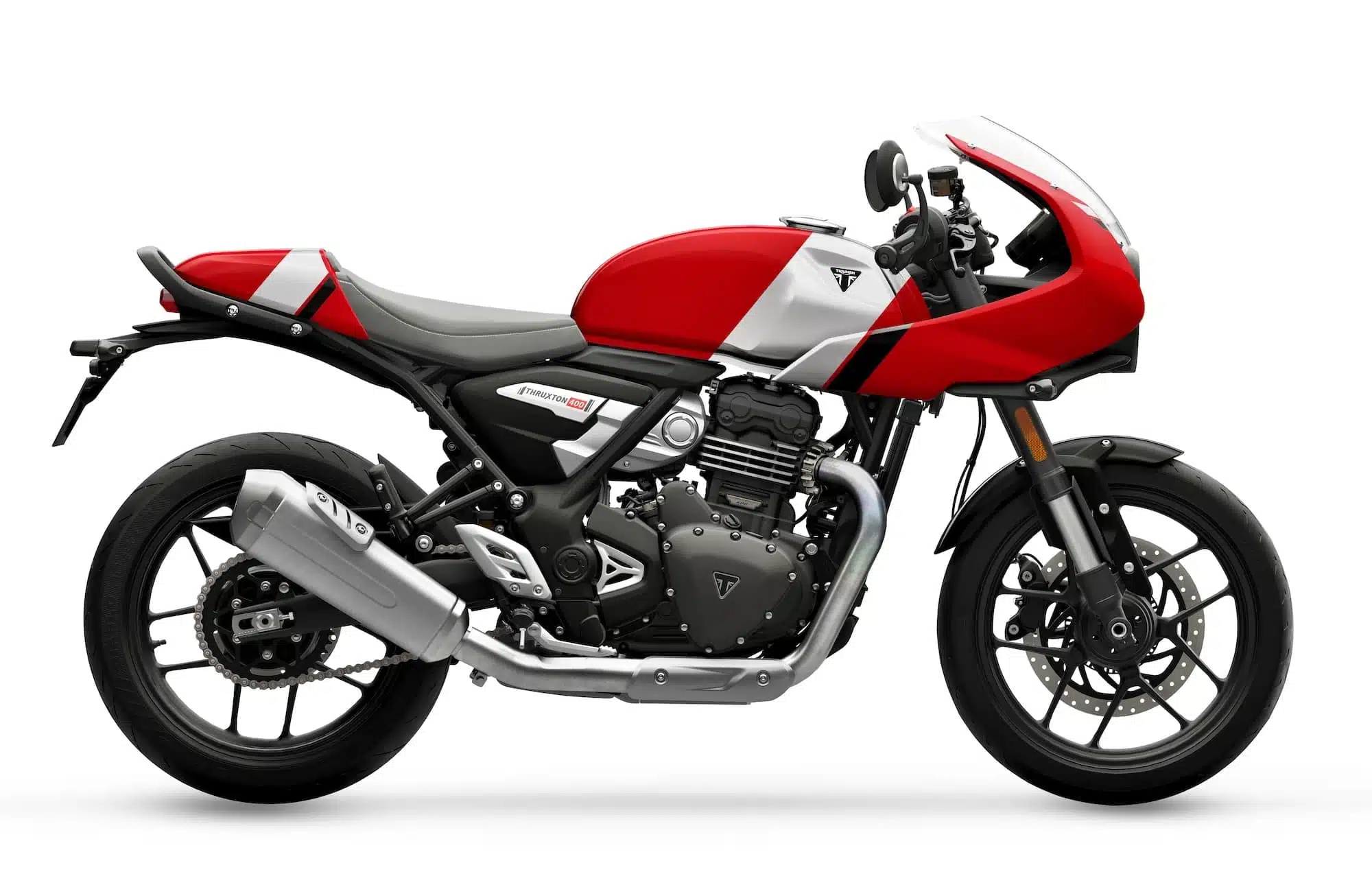
The Thruxton 400 is the café-racer branch of Triumph’s 400-class Modern Classics. It uses a 398 cc liquid-cooled single-cylinder TR-series engine, a six-speed gearbox and chain final drive. Its tune is stronger than the Speed 400’s: Triumph quotes 30.9 kW / 41.4 hp and 37.5 Nm / 27.6 lb-ft.
This page covers the 2026 Thruxton 400 schedule shown in the supplied manual, as well as some notes on parts to use and how to maintain some specific parts of the motorcycle.


Triumph Thruxton 400 Service Intervals
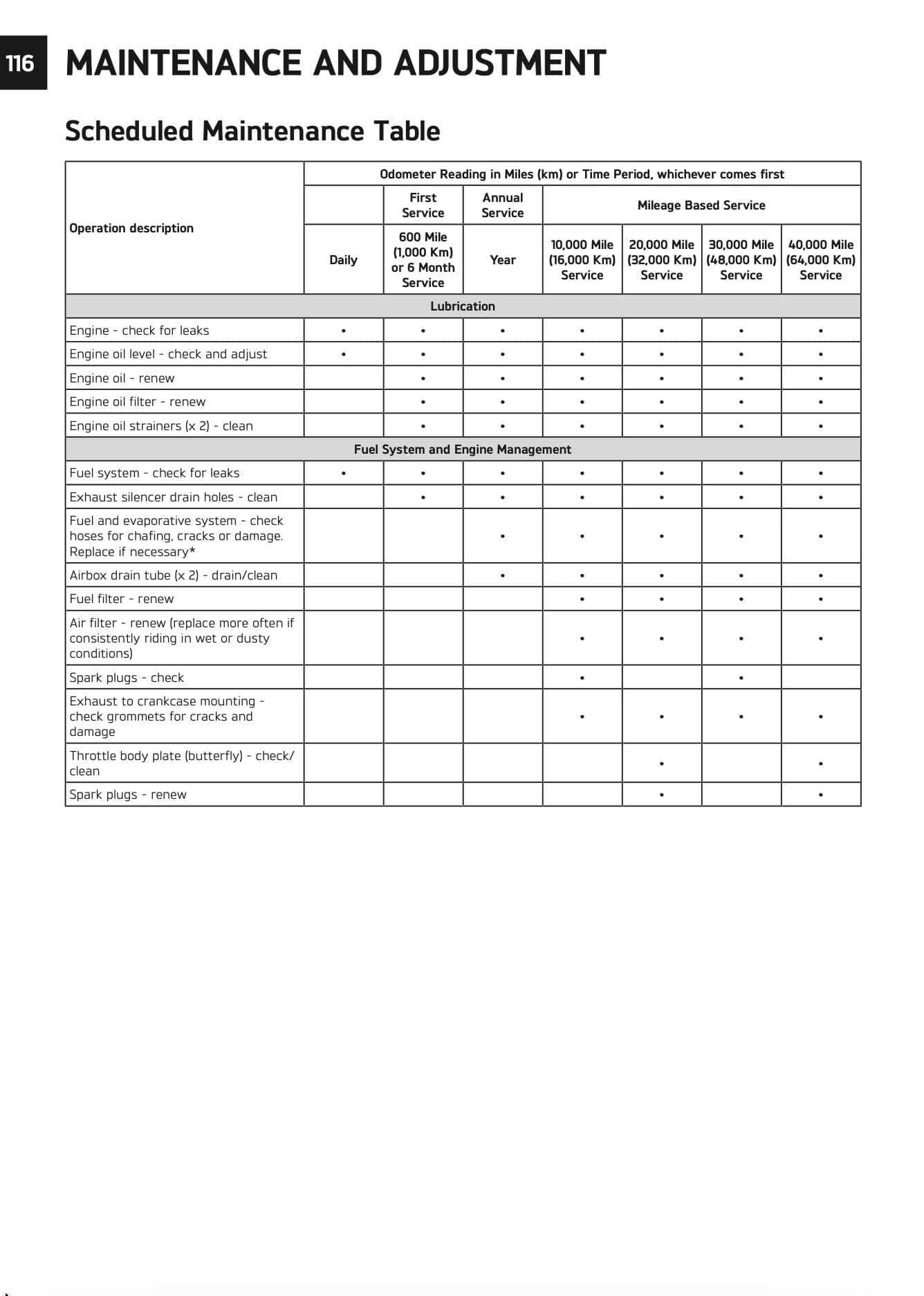
The Thruxton 400 has a first service at 1,000 km (600 mi) or six months, then a normal service rhythm of 16,000 km (10,000 mi) or 12 months. At those services, the manual calls for oil, oil-filter and oil-strainer work, along with a detailed set of checks.
The first major service is at 32,000 km (20,000 mi): it includes valve-clearance inspection/adjustment, spark-plug replacement, throttle-body cleaning and the other scheduled checks. Maintain the chain more often than the main service interval — the manual specifies lubrication every 300 km (200 mi).
Wet, dusty or otherwise hard use shortens the practical interval for the air filter and chain care. The schedule below does not replace pre-ride checks or attention to leaks, tyres and brakes.
2026 Triumph Thruxton 400 Maintenance Schedule
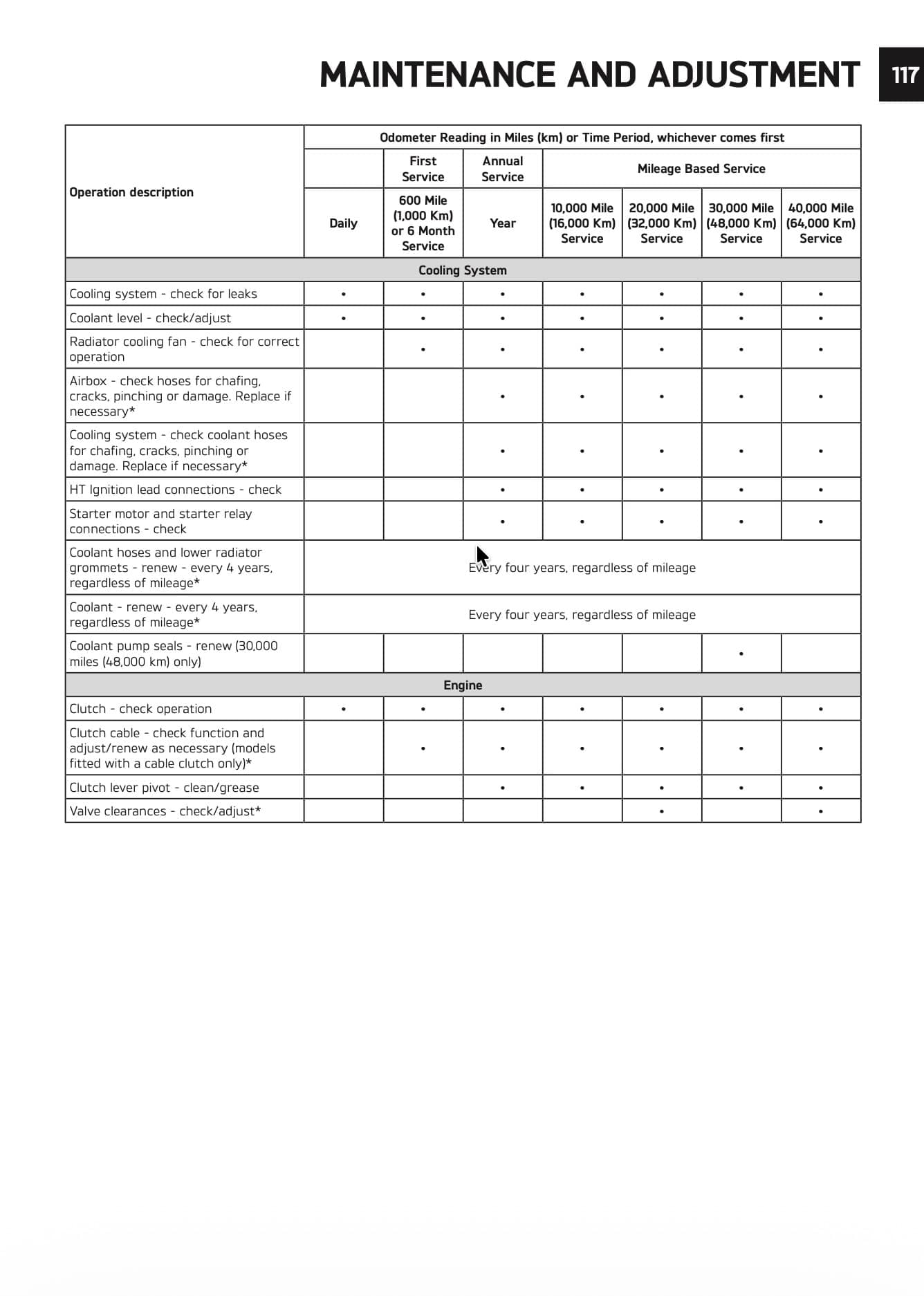
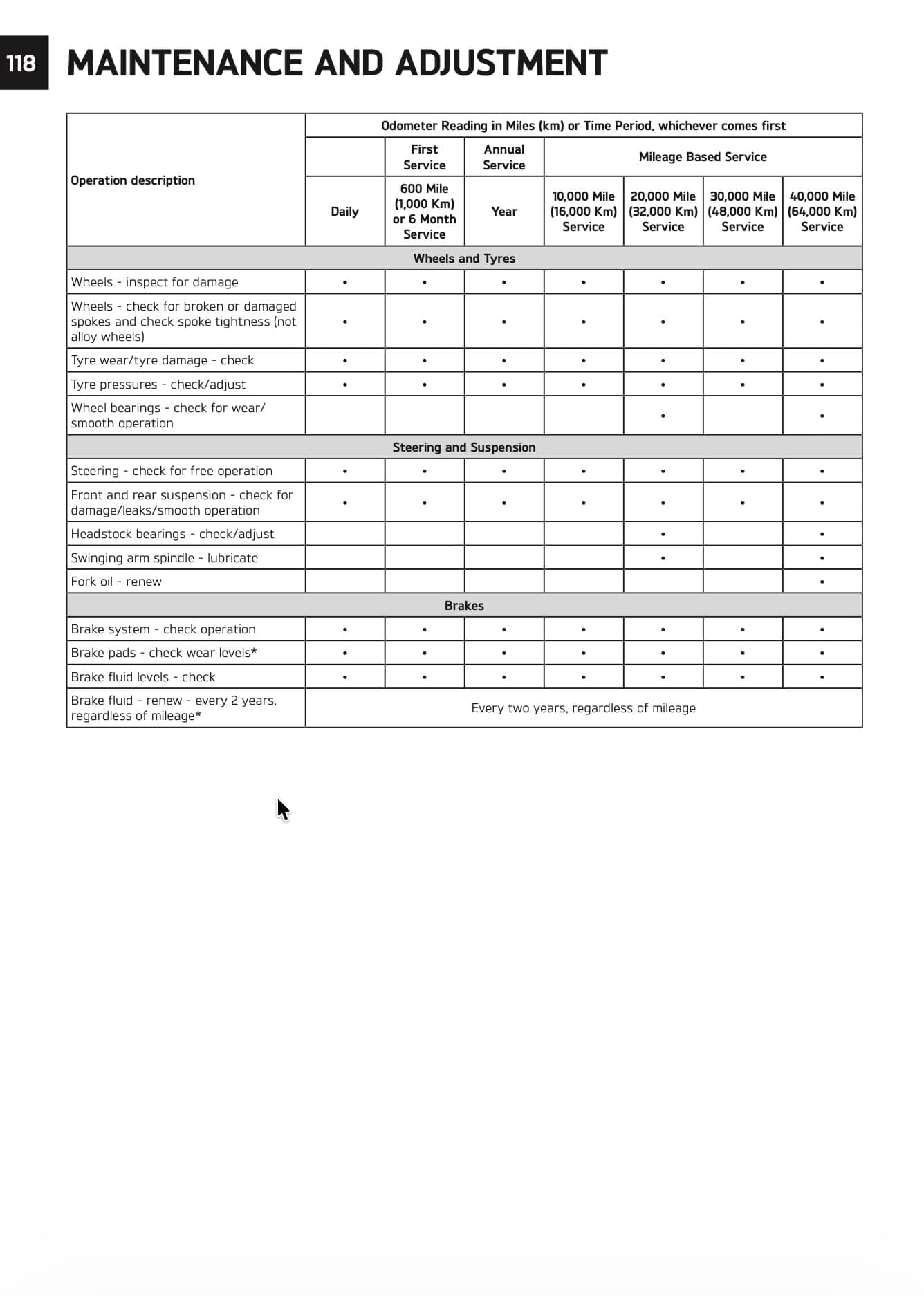
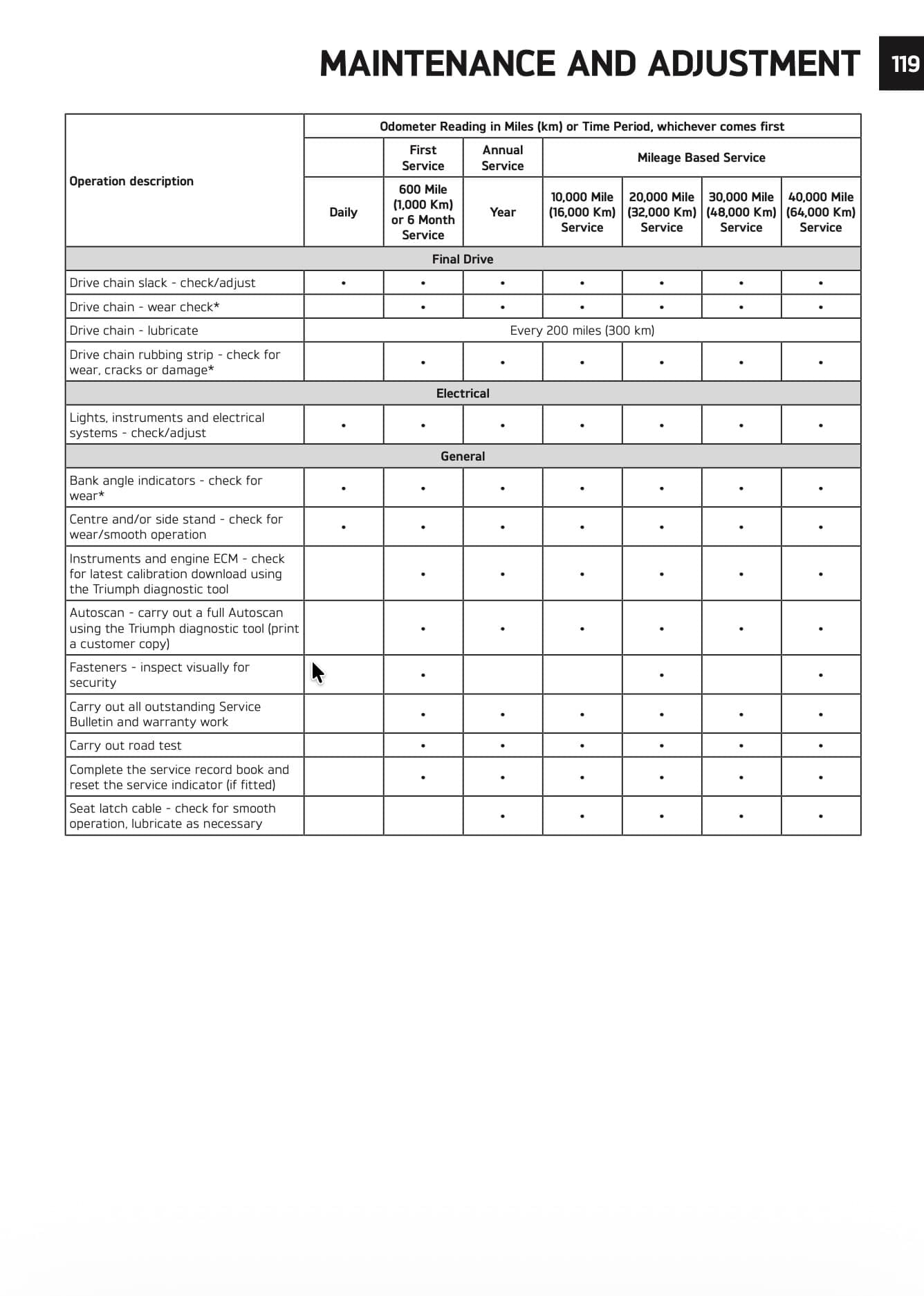
The table below is adapted from the supplied Thruxton 400 owner’s-manual pages. A tick means the item is listed at that interval. Keep repeating the mileage pattern after 64,000 km (40,000 mi), and always follow the earlier of time or distance.
Items marked * are marked that way in the manual and may require dealer equipment, special procedures or a technician’s judgement.
| Operation | Daily | 1,000 km (600 mi) / 6 mo | 12 months | 16,000 km (10,000 mi) | 32,000 km (20,000 mi) | 48,000 km (30,000 mi) | 64,000 km (40,000 mi) |
|---|---|---|---|---|---|---|---|
| Lubrication | |||||||
| Engine — check for leaks | ✓ | ✓ | ✓ | ✓ | ✓ | ✓ | ✓ |
| Engine oil level — check and adjust | ✓ | ✓ | ✓ | ✓ | ✓ | ✓ | ✓ |
| Engine oil — renew | ✓ | ✓ | ✓ | ✓ | ✓ | ✓ | |
| Engine oil filter — renew | ✓ | ✓ | ✓ | ✓ | ✓ | ✓ | |
| Engine oil strainers (x2) — clean | ✓ | ✓ | ✓ | ✓ | ✓ | ✓ | |
| Fuel system and engine management | |||||||
| Fuel system — check for leaks | ✓ | ✓ | ✓ | ✓ | ✓ | ✓ | ✓ |
| Exhaust silencer drain holes — clean | ✓ | ✓ | ✓ | ✓ | ✓ | ✓ | |
| Fuel and evaporative system — check hoses; replace if necessary* | ✓ | ✓ | ✓ | ✓ | ✓ | ||
| Airbox drain tubes (x2) — drain/clean | ✓ | ✓ | ✓ | ✓ | ✓ | ||
| Fuel filter — renew | ✓ | ✓ | ✓ | ✓ | |||
| Air filter — renew (more often in wet or dusty use) | ✓ | ✓ | ✓ | ✓ | |||
| Spark plugs — check | ✓ | ✓ | |||||
| Exhaust-to-crankcase mounting — check grommets | ✓ | ✓ | ✓ | ✓ | |||
| Throttle-body plate (butterfly) — check/clean | ✓ | ✓ | |||||
| Spark plugs — renew | ✓ | ✓ | |||||
| Cooling system and engine | |||||||
| Cooling system — check for leaks | ✓ | ✓ | ✓ | ✓ | ✓ | ✓ | ✓ |
| Coolant level — check/adjust | ✓ | ✓ | ✓ | ✓ | ✓ | ✓ | ✓ |
| Radiator cooling fan — check operation | ✓ | ✓ | ✓ | ✓ | ✓ | ✓ | |
| Airbox — check hoses for damage; replace if necessary* | ✓ | ✓ | ✓ | ✓ | ✓ | ||
| Cooling system — check coolant hoses; replace if necessary* | ✓ | ✓ | ✓ | ✓ | ✓ | ||
| HT ignition lead connections — check | ✓ | ✓ | ✓ | ✓ | ✓ | ||
| Starter motor and starter-relay connections — check | ✓ | ✓ | ✓ | ✓ | ✓ | ||
| Clutch — check operation | ✓ | ✓ | ✓ | ✓ | ✓ | ✓ | ✓ |
| Clutch cable — check function/adjust/renew as necessary* | ✓ | ✓ | ✓ | ✓ | ✓ | ✓ | |
| Clutch lever pivot — clean/grease | ✓ | ✓ | ✓ | ✓ | ✓ | ||
| Valve clearances — check/adjust* | ✓ | ✓ | |||||
| Wheels, tyres, steering and brakes | |||||||
| Wheels — inspect for damage | ✓ | ✓ | ✓ | ✓ | ✓ | ✓ | ✓ |
| Spokes — inspect/check tightness (where fitted; not alloy wheels) | ✓ | ✓ | ✓ | ✓ | ✓ | ✓ | ✓ |
| Tyre wear/damage — check | ✓ | ✓ | ✓ | ✓ | ✓ | ✓ | ✓ |
| Tyre pressures — check/adjust | ✓ | ✓ | ✓ | ✓ | ✓ | ✓ | ✓ |
| Wheel bearings — check for wear/smooth operation | ✓ | ✓ | |||||
| Steering — check for free operation | ✓ | ✓ | ✓ | ✓ | ✓ | ✓ | ✓ |
| Front and rear suspension — check condition/leaks/operation | ✓ | ✓ | ✓ | ✓ | ✓ | ✓ | ✓ |
| Headstock bearings — check/adjust | ✓ | ✓ | |||||
| Swinging-arm spindle — lubricate | ✓ | ✓ | |||||
| Fork oil — renew | ✓ | ||||||
| Brake system — check operation | ✓ | ✓ | ✓ | ✓ | ✓ | ✓ | ✓ |
| Brake pads — check wear levels* | ✓ | ✓ | ✓ | ✓ | ✓ | ✓ | ✓ |
| Brake-fluid levels — check | ✓ | ✓ | ✓ | ✓ | ✓ | ✓ | ✓ |
| Final drive and general | |||||||
| Drive-chain slack — check/adjust | ✓ | ✓ | ✓ | ✓ | ✓ | ✓ | ✓ |
| Drive chain — wear check* | ✓ | ✓ | ✓ | ✓ | ✓ | ✓ | |
| Drive-chain rubbing strip — inspect for wear/damage* | ✓ | ✓ | ✓ | ✓ | ✓ | ✓ | |
| Lights, instruments and electrical systems — check/adjust | ✓ | ✓ | ✓ | ✓ | ✓ | ✓ | ✓ |
| Bank-angle indicators — check for wear* | ✓ | ✓ | ✓ | ✓ | ✓ | ✓ | ✓ |
| Centre/side stand — check for wear/smooth operation | ✓ | ✓ | ✓ | ✓ | ✓ | ✓ | ✓ |
| Instruments and engine ECM — check latest calibration | ✓ | ✓ | ✓ | ✓ | ✓ | ||
| Autoscan using Triumph diagnostic tool (print customer copy) | ✓ | ✓ | ✓ | ✓ | ✓ | ||
| Fasteners — inspect visually for security | ✓ | ✓ | ✓ | ✓ | ✓ | ✓ | |
| Outstanding service bulletins/warranty work | ✓ | ✓ | ✓ | ✓ | ✓ | ✓ | |
| Road test | ✓ | ✓ | ✓ | ✓ | ✓ | ✓ | |
| Complete service record/reset indicator (if fitted) | ✓ | ✓ | ✓ | ✓ | ✓ | ✓ | |
| Seat-latch cable — check operation/lubricate | ✓ | ✓ | ✓ | ✓ | ✓ | ||
Time-based and longer-term maintenance
Some tasks do not wait for mileage. Brake fluid is on a two-year timer; coolant and the coolant hoses are on four-year timers. These are easy items to miss if the bike has done low annual mileage.
| Item | Interval | Manual note |
|---|---|---|
| Drive chain — lubricate | Every 300 km (200 mi) | Lubricate sooner after wet riding or washing. |
| Brake fluid — renew | Every 2 years | Regardless of mileage. |
| Coolant hoses and lower radiator grommets — renew | Every 4 years | Regardless of mileage. |
| Coolant — renew | Every 4 years | Regardless of mileage. |
| Coolant-pump seals — renew | 48,000 km (30,000 mi) | One-time scheduled renewal shown in the supplied manual. |
| Valve clearances — check/adjust* | 32,000 km (20,000 mi), then 64,000 km (40,000 mi) | Major service item. |
| Spark plugs — renew | 32,000 km (20,000 mi), then 64,000 km (40,000 mi) | Inspect at 16,000 km and 48,000 km. |
| Fork oil — renew | 64,000 km (40,000 mi) | Follow the manual for subsequent intervals. |
Chain care for the Triumph Thruxton 400
Check chain slack daily or before riding, and lubricate the chain every 300 km (200 mi). The manual also calls for a wear check at the first service and at every annual/mileage service thereafter. Rotate the rear wheel and assess the tightest section before deciding whether adjustment is needed.
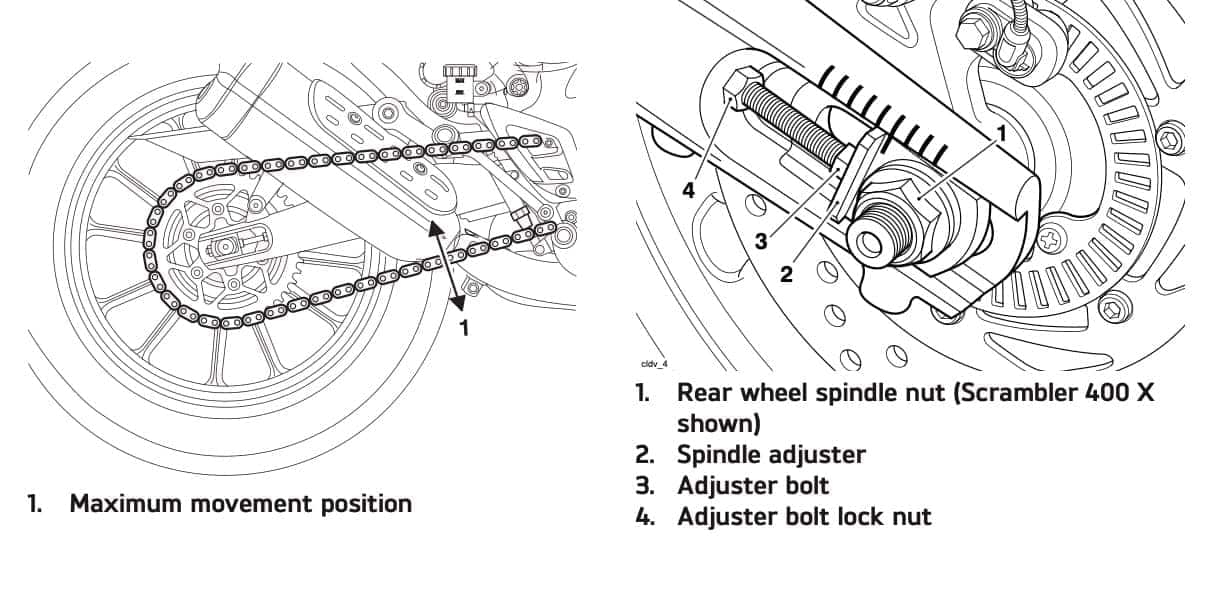
The supplied diagram identifies the maximum-movement measuring position and the rear-wheel adjuster hardware. It is a useful visual reference, but it labels a Scrambler 400 X in the illustration; do not transfer torque values from it to the Thruxton 400 without confirming them in the Thruxton handbook.
About the Triumph Thruxton 400
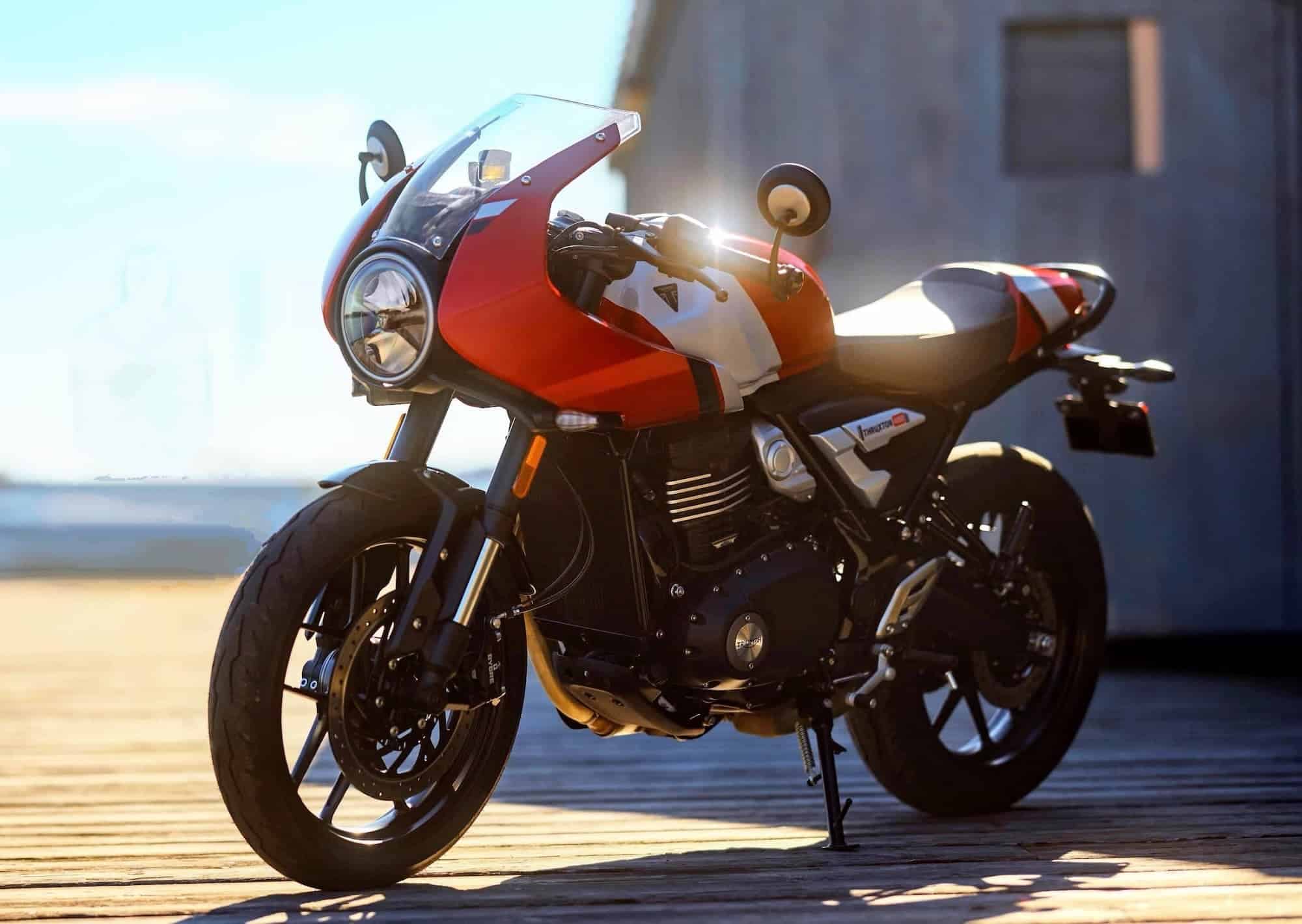
Triumph introduced the Thruxton 400 for 2026 as the café-racer model in its 400-class Modern Classics range. The half fairing, clip-on handlebars and rear-set footpegs put the rider lower and farther forward than on the Triumph Speed 400. That gives the Thruxton its traditional café-racer silhouette and makes more sense for riders who enjoy a forward road-riding position than for someone who wants a fully upright commuter.
It uses Triumph’s 398 cc liquid-cooled TR-series single, a six-speed gearbox and chain final drive. Triumph rates this version at 30.9 kW (41.4 hp) and 37.5 Nm (27.6 lb-ft). The engine gives the Thruxton enough power for open-road riding while keeping the weight, cost and physical size in the entry-level part of the modern-classic market.
Triumph pairs the engine with 43 mm upside-down forks and a preload-adjustable rear shock. Pirelli Diablo Rosso IV tyres and a four-piston radial front brake suit the Thruxton’s road focus, while ABS and switchable traction control provide a safety margin on wet or variable-surface roads. The fairing is small, so it takes some pressure off the rider at speed rather than turning the bike into a touring motorcycle.
The Thruxton shares its basic engine family with the Scrambler 400 X / Scrambler 400 XC, but the Scramblers use a taller, more relaxed layout and a different wheel and suspension approach. Use this Thruxton schedule for its service work, particularly for the model-specific chassis and component checks. The three bikes have related engines, yet each owner’s manual defines its own maintenance table.
The older Thruxton 900 EFI is a separate, air-cooled parallel-twin model with its own parts and service intervals. The shared Thruxton name explains the styling connection; it does not establish any maintenance compatibility.
References — Screenshots from the 2026 Triumph Thruxton 400 Owner’s Manual
The schedule tables above were transcribed from the supplied 2026 Triumph Thruxton 400 owner’s manual pages 116–119. The screenshots below show the original maintenance matrix, including time-based fluid changes, chain care and general checks. For the current handbook for your motorcycle and market, use Triumph’s owner’s manual library.