
Kawasaki Ninja ZX-11 / ZZ-R1100 Maintenance Schedule and Service Intervals

This is the maintenance schedule with associated service intervals for the Kawasaki Ninja ZX-11 also known as ZZ-R1100 (or just ZZR1100).
The Kawasaki Ninja ZX-11 is a sportbike in the Ninja series made from 1990 to 2001. It was marketed as the ZX-11 Ninja in North America and the ZZ-R1100 in the rest of the world.
The Kawasaki Ninja ZX-11 is powered by a DOHC 1052 CC in-line 4-cylinder carburettor-fed engine that made 108 kW (145 hp) and 108 Nm of torque at peak. With a top speed of 272–283 km/h (169–176 mph), it was the fastest production motorcycle for a while — from its introduction until 1996, when the Honda CBR1100XX Blackbird stole its glory.
The Kawasaki ZX-11 was replaced by two motorcycles, the Kawasaki ZX-12R and the ZZ-R1200.


This site has links for things like oil and spark plugs from which we earn a commission (which unfortunately nobody can save, not even us). If you appreciate this work, then please use those links. Thanks!
Maintenance Schedule for Kawasaki Ninja ZX-11
Below is the maintenance schedule for the Kawasaki Ninja ZX-11.
The following is the list of maintenance operations and to be done on this motorcycle with a time or distance interval — whichever comes earlier.
The original maintenance schedule for the Kawasaki Ninja ZX-11 was divided into “emission related” and “non-emission-related”, but I’ve combined them as it’s more practical.
Notes:
- For higher odometer readings, repeat at the frequency interval below.
- Kawasaki recommends safety and emissions items “should be serviced by an authorized Kawasaki dealer”
- For items marked “Check”: Replace, adjust, or torque if necessary
- Service air filter, chain, and engine oil/filter more frequently when operation in severe conditions: dusty, wet, muddy, high speed, or frequent starting/stopping
| mi x 1000 | 3 | 6 | 9 | 12 | 15 | 18 | |
|---|---|---|---|---|---|---|---|
| km x 1000 | Every | 5 | 10 | 15 | 20 | 25 | 30 |
| Spark plug — clean, gap, replace if necessary (NGK CR9E) | ✓ | ✓ | ✓ | ✓ | ✓ | ✓ | |
| Engine oil — change (Mobil 1 Synthetic) | year | ✓ | ✓ | ✓ | |||
| Oil filter — replace (Hiflofiltro HF401) | ✓ | ✓ | ✓ | ||||
| Carburettor synchronization — check | ✓ | ✓ | ✓ | ✓ | ✓ | ✓ | |
| Valve clearances — check | ✓ | ✓ | ✓ | ||||
| Idle speed — check | ✓ | ✓ | ✓ | ✓ | ✓ | ✓ | |
| Throttle grip play — check | ✓ | ✓ | ✓ | ||||
| Air cleaner element and air vent filter — clean | ✓ | ✓ | ✓ | ||||
| Air cleaner element and air vent filter — replace (KA-1093) | 5 cleanings | ✓ | |||||
| Air suction valve — check | ✓ | ✓ | ✓ | ✓ | ✓ | ✓ | |
| Fuel system — check | ✓ | ✓ | ✓ | ||||
| Evaporative emission control system (CA only) — check | ✓ | ✓ | ✓ | ✓ | ✓ | ✓ | |
| Brake light switch — check | ✓ | ✓ | ✓ | ✓ | ✓ | ✓ | |
| Brake pad wear — check | ✓ | ✓ | ✓ | ✓ | ✓ | ✓ | |
| Brake/clutch fluid level — check | month | ✓ | ✓ | ✓ | ✓ | ✓ | ✓ |
| Brake/clutch fluid — change (Castrol DOT 4) | 2 years | ✓ | |||||
| Steering — check | ✓ | ✓ | ✓ | ✓ | ✓ | ✓ | |
| Drive chain wear — check | ✓ | ✓ | ✓ | ✓ | ✓ | ✓ | |
| Nuts, bolts, and fasteners tightness — check | ✓ | ✓ | ✓ | ||||
| Tire wear — check | ✓ | ✓ | ✓ | ✓ | ✓ | ✓ | |
| General Lubrication — perform (Lithium soap-based grease) | ✓ | ✓ | ✓ | ✓ | ✓ | ✓ | |
| Front fork oil — change | ✓ | ||||||
| Swingarm pivot, uni-trak linkage — lubricate | ✓ | ✓ | ✓ | ||||
| Coolant — change (Zerex G05) | 2 years | ✓ | |||||
| Radiator hoses, connections — check | year | ✓ | ✓ | ✓ | |||
| Steering stem bearing — lubricate | 2 years | ✓ | |||||
| Fuel filter — replace | ✓ | ✓ | ✓ | ||||
| Brake/clutch master cylinder cup and dust seal — replace | 2 years | ||||||
| Caliper piston seal and dust seal — replace | 2 years | ||||||
| Clutch slave cylinder piston seal — replace | 3 years | ||||||
| Brake hose/ clutch hose and pipe — replace | 4 years | ||||||
| Fuel hose — replace | 4 years |
Kawasaki Ninja ZX-11 — Chain Maintenance
It’s important to maintain your chain on the ZX-11, as a high-speed tourer / everyday commuter’s chain is likely to get a lot of abuse.
Kawasaki recommends you follow the following chain maintenance schedule:
| Chain maintenance item | Every |
|---|---|
| Check drive chain lubrication condition, lubricating if necessary (Motul chain paste is a simple and cheap recommendation) | 400 mi / 600 km |
| Check drive chain slack, adjusting if necessary | 600 mi / 1000 km |
Notes:
- Do these items (checking/adjusting slack, and checking/applying lubrication) more often if you ride your Ninja ZX-11 in dusty or rainy conditions.
- Always lubricate the chain after washing the motorcycle.
Tyre size and tyre pressure for the Kawasaki Ninja ZX-11 / ZZ-R1100
The Kawasaki Ninja ZX-11 has the following tyre sizes, and the following recommended tyre pressures per the manual.
| Wheel | Tyre size | Tyre pressure |
|---|---|---|
| Front | 120/70 ZR17 DUNLOP D204FU | 290 kPa/41 psi |
| Rear | 180/55 ZR17 DUNLOP D204P | 290 kPa/41 psi |
It shipped with Bridgestone Battlax tires of a generation you can’t get today (BT-57), so use more modern ones.
About the Kawasaki Ninja ZX-11
The Kawasaki Ninja ZX-11 is arguably the first super high-speed tourer to lead the craze that led to the Honda Blackbird, then the Suzuki Hayabusa, then back to Kawasaki with the ZX-12 (which replaced the ZX-11) and the ZX-14 range, and finally back to Kawasaki again with the high-speed supercharged H2 range.
The Ninja ZX-11 isn’t just a high-speed machine though. It can appeal to riders in various situations. It has suspension, tuning, and an ergonomic layout that give a smooth, comfortable, and extremely competent ride on the highway. It’s adept in other areas too — it handles well for a big machine, and the under-stressed engine doesn’t get too hot when commuting.
The aerodynamically slippery bodywork gives the Ninja ZX-11 a powerful but elegant presence that’s backed up by the power from the big engine. The 1052 cc four-cylinder DOHC liquid-cooled block is surprisingly compact, but still powerful enough to help the ZX-11 beat anything on the road in its time… and most things, these days.
The ZX-11 is an older design so it is carburettor fed. This means that if you do happen to get one, make sure you plan to do a carburettor clean and sync to get it breathing properly. It might also need re-jetting if there are aftermarket intake and exhaust components on it. The good news is that you don’t have to take it to a dyno place to get the EFI reprogrammed!
The ZX-11, like later Ninjas, uses ram air induction to pressurise the airbox. A gear-driven engine balancer smooths engine vibration for increased rider comfort.
Servicing the ZX-11 is like servicing many other liquid-cooled sportbikes, especially those from Kawasaki. The service intervals on the ZX-11 / ZZ-R1100 are every 3000 miles / 35000 km, though the main requirement at that point is a spark plug check and carburetor sync, plus looking over safety and emissions-related parts.
You change the oil every 6000 miles / 10000 km or annually. At that distance interval (6000 mile / 10000 km), you also have to check the valve clearances, which can be quite a job as you have to take off the fairings!
Aside from that, remember to keep the coolant and brake fluid fresh, and maintain the chain with a quality cleaner and lubricant.
Manual for the Kawasaki Ninja ZX-11
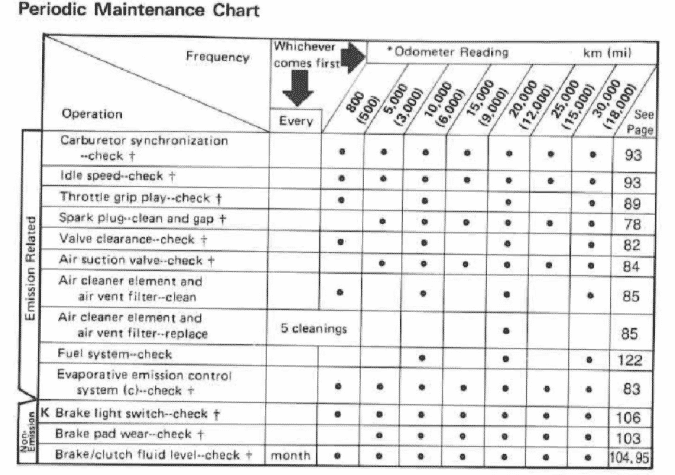
The above maintenance schedule comes directly from the user’s manual for the 2000-2001 Kawasaki Ninja ZX-11, which is available here.

Need some help with the ZZR1100c3 I got as a project bike. new cylinder head gasket new plugs cleaned out the cards 3 times new wiring harness rebuild the back brakes new battery new HT leads. took it into a shop as I couldn’t get it running. good compression spark and fuel and he got it running and balance the carbs. then it wouldn’t start again. got it home started on easy start had the carbs cleaned again they work now with the new jets but it will not run. took it to a mate shop he got it running then it stopped again and its been weeks now and it will not start. also can you explain to me the water pipes that run into the carbs and mix with the petrol pipes? I just cant get my head around this anymore.
Hopefully someone out there can help… I’m not an expert on these bikes by any means. Beyond a carb rebuild and the usual looking for spark and fuel I take mine to my mechanic, that’s what he’s there for…