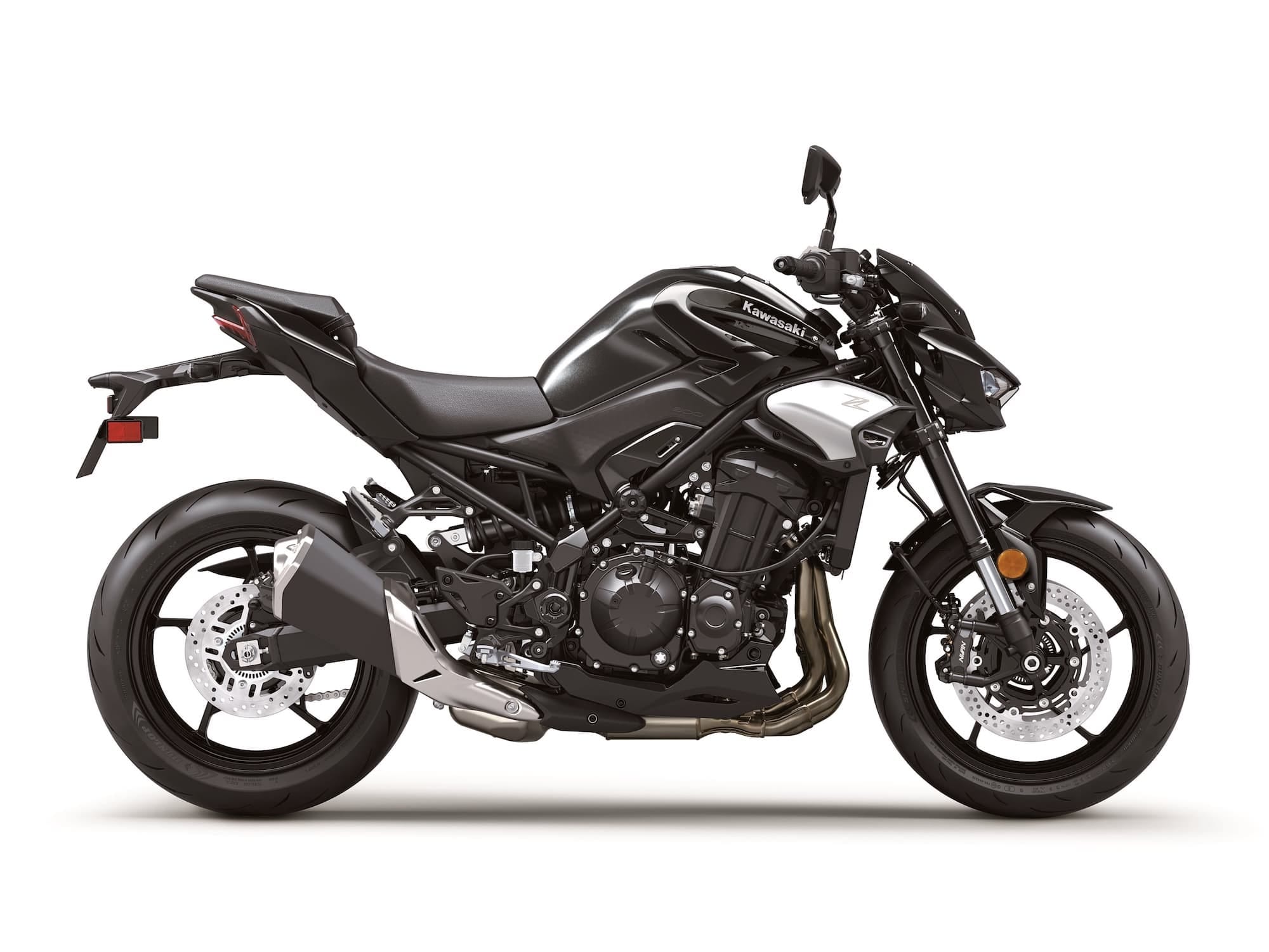
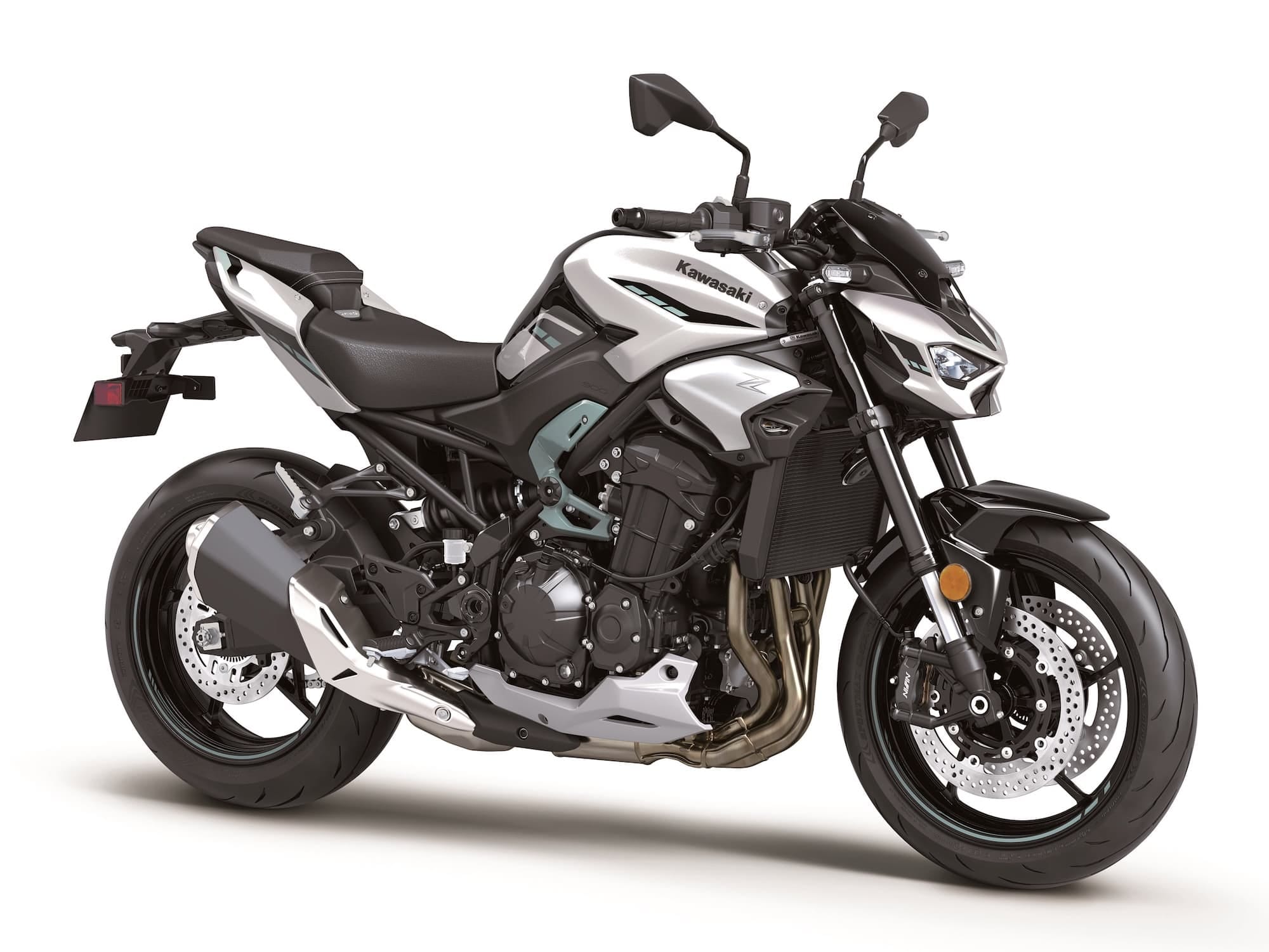
Kawasaki Z900 / Z900 SE (2025+) Maintenance Schedule and Service Intervals

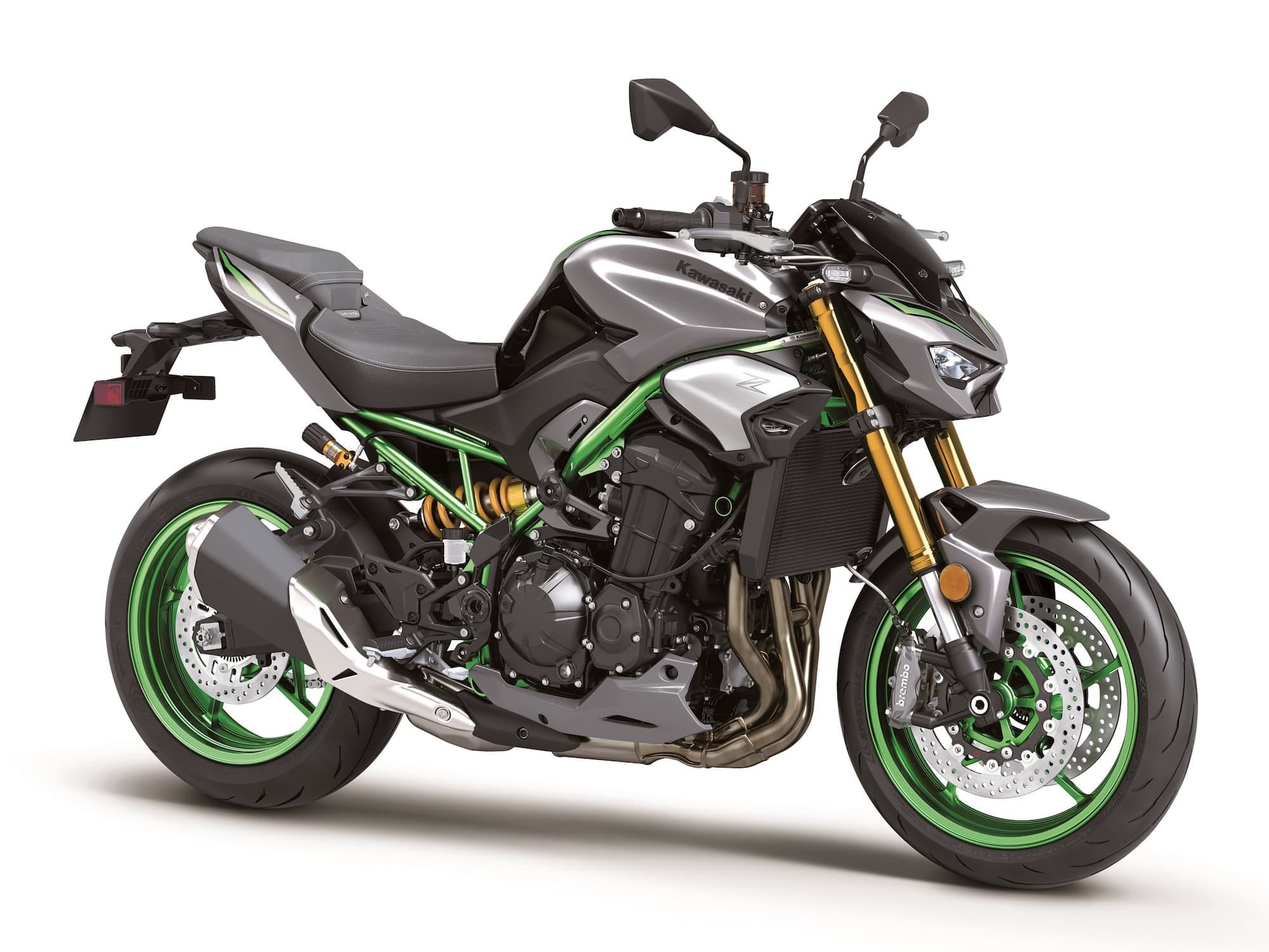
This is the maintenance schedule and service intervals for the 2025+ Kawasaki Z900 and Z900 SE. It covers the new-generation ZR900S base model and ZR900T SE; Kawasaki lists the same routine maintenance schedule for both.
The schedule below is transcribed from the Australian 2025 owner’s manual, publication 99815-0051. Distances and specifications are metric first. Equipment and engine output can vary by market, but the shared 948 cc liquid-cooled DOHC inline-four, six-speed transmission and chain drive are common to this generation.
Kawasaki substantially revised the Z900 for 2025 with electronic throttle valves, a two-way quickshifter, cruise control, IMU-supported rider aids, a new TFT display and revised chassis details. These changes make this a separate generation from the 2020–2024 Kawasaki Z900.


This site has links for things like oil and spark plugs from which we earn a commission (which unfortunately nobody can save, not even us). If you appreciate this work, then please use those links. Thanks!
Kawasaki Z900 / Z900 SE Service Intervals
Complete the first service at 1,000 km (600 mi). After that, the main distance-based service interval is 12,000 km (7,600 mi), and the pattern repeats after 48,000 km (30,400 mi). Where Kawasaki specifies both time and distance, use whichever comes first.
- Replace the engine oil and oil filter at 1,000 km (600 mi), then every 12,000 km (7,600 mi) or annually.
- Replace the spark plugs every 12,000 km (7,600 mi).
- Inspect the valve clearances every 24,000 km (15,200 mi).
- Replace the air cleaner and fuel filter every 24,000 km (15,200 mi). Service the air cleaner more often in dusty or wet conditions.
- Replace brake fluid every two years and coolant, water hoses and O-rings every three years.
The manual also calls for several annual inspections even when the motorcycle has not reached the next 12,000 km interval. Shorten the service interval when the bike is used in dust, rain, mud, salt air, frequent stop-start riding or sustained high-load conditions.
Maintenance Parts and Fluids
The following specifications are stated in the 2025 owner’s manual. Confirm any market-specific replacement part number against the motorcycle’s VIN before ordering.
| Item | 2025+ Z900 / Z900 SE specification |
|---|---|
| Engine oil | SAE 10W-40; API SG, SH, SJ, SL or SM; JASO MA, MA1 or MA2. Capacity: 3.2 L (3.4 US qt) without filter, 3.6 L (3.8 US qt) with filter, 4.0 L (4.2 US qt) total. |
| Oil filter | Use a genuine Kawasaki filter or a verified equivalent for the 2025 ZR900S/T. Tightening torque: 17 N·m (13 lb-ft). |
| Spark plugs | NGK CR9EIA-9; gap 0.8–0.9 mm (0.031–0.035 in). |
| Brake fluid | DOT 4. |
| Coolant | Permanent-type ethylene-glycol coolant suitable for aluminium engines and radiators, mixed with soft water and corrosion inhibitor as specified by the product. |
| Drive-chain lubricant | Lubricant intended for a sealed motorcycle chain. Apply it to the sides of the rollers and seals, then wipe off excess. |
Maintenance Schedule for the 2025+ Kawasaki Z900 / Z900 SE
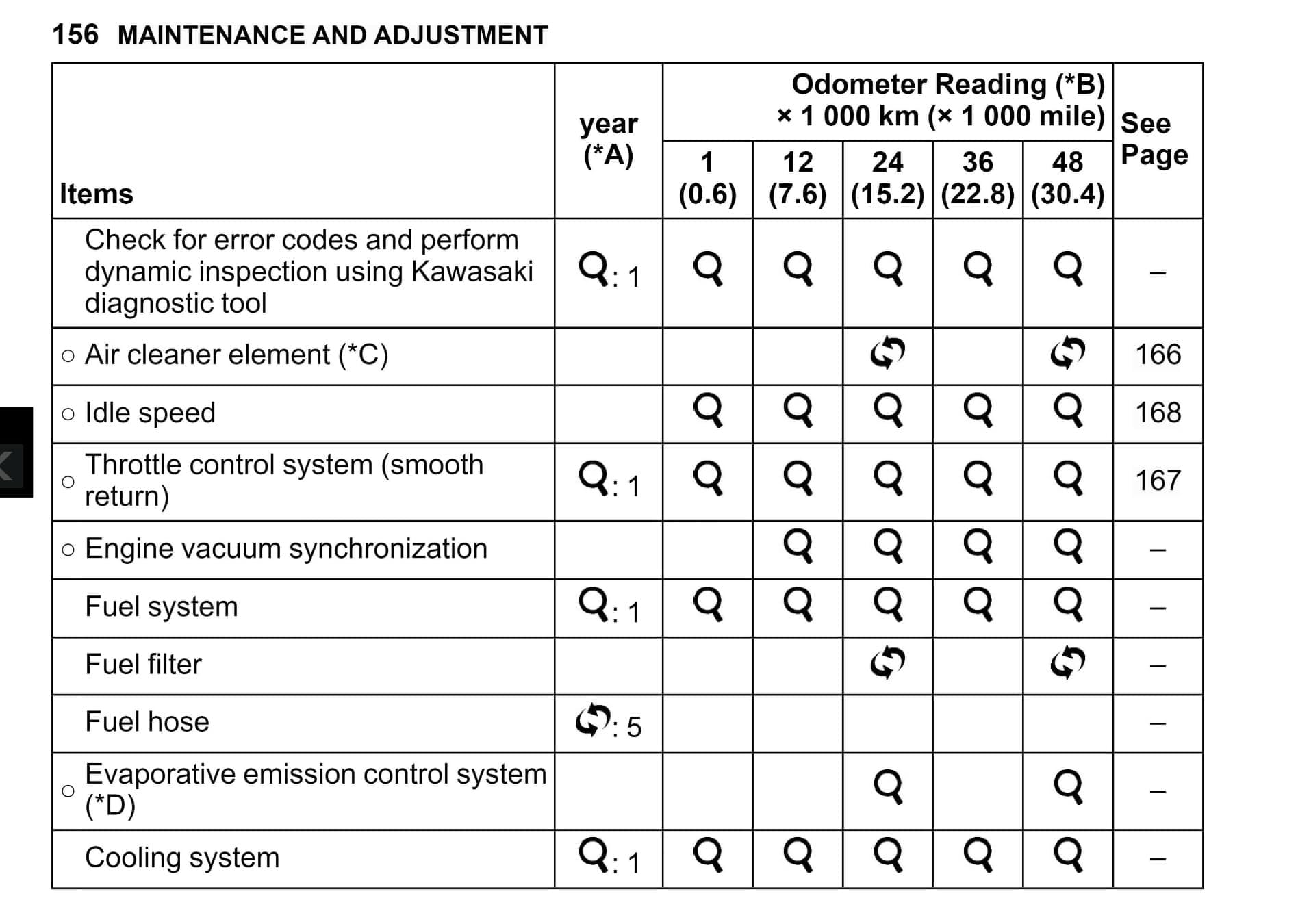
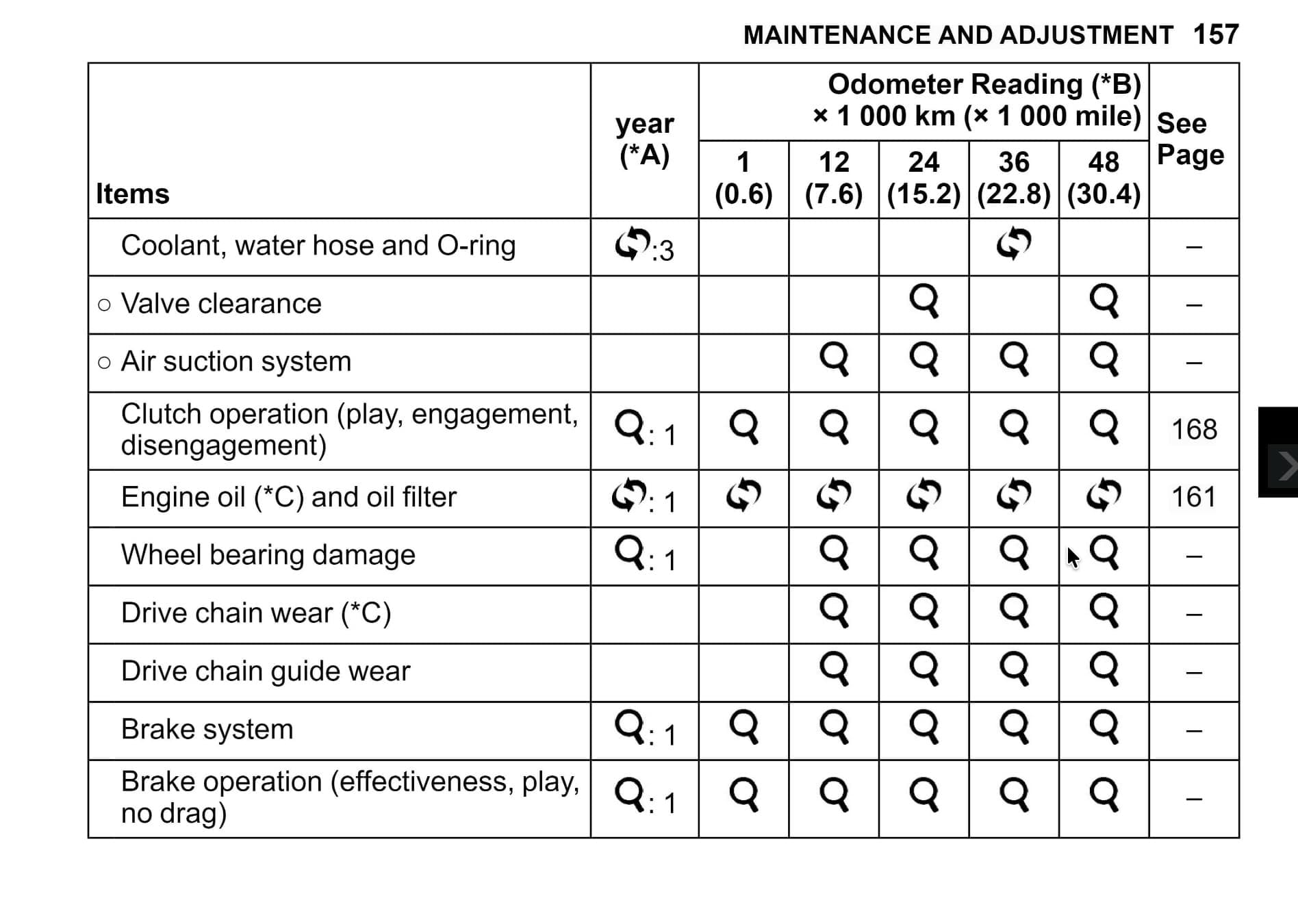
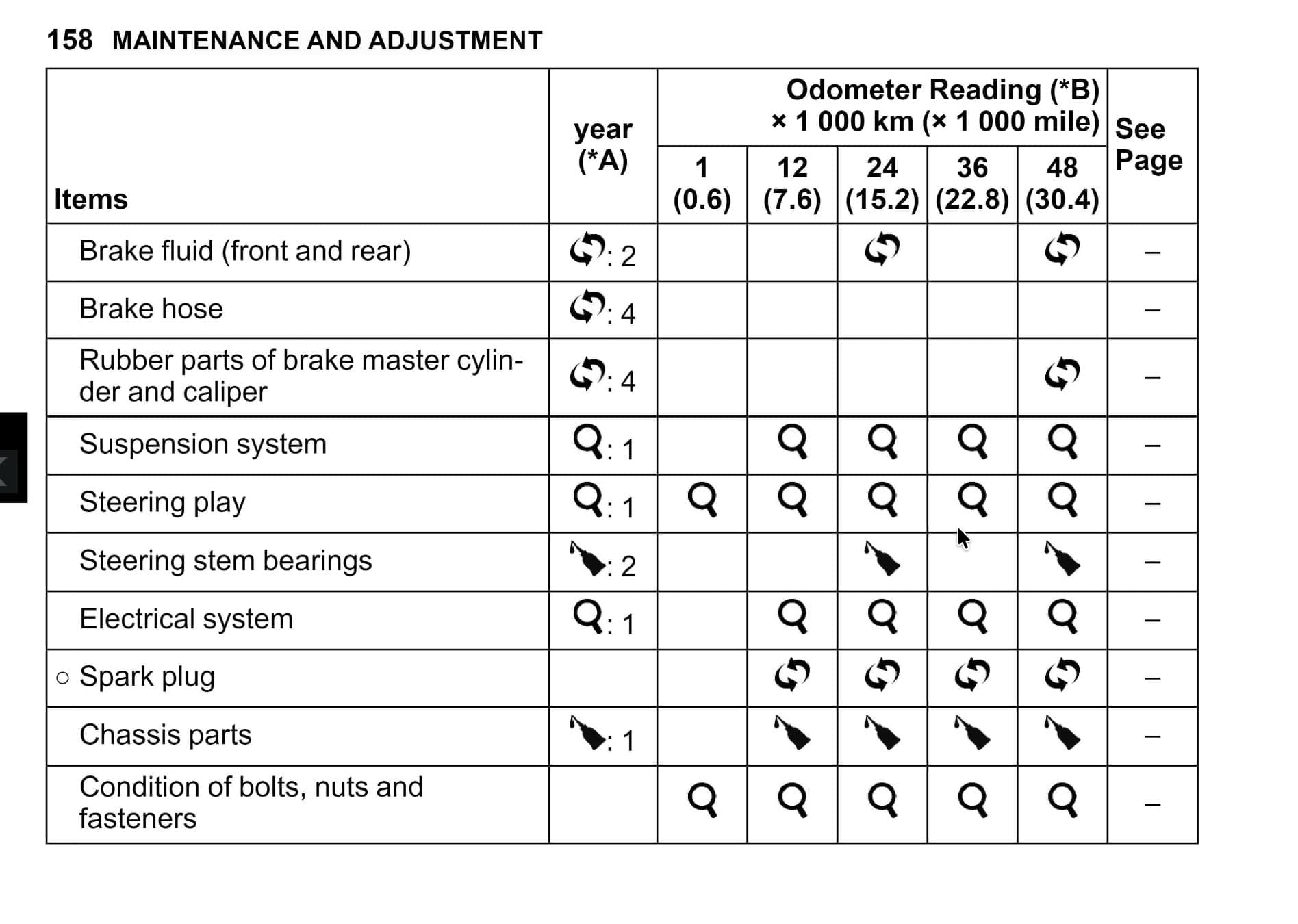
This table reformats the manual’s periodic-maintenance pages. A check mark means perform the work at that distance. Repeat the pattern after 48,000 km (30,400 mi).
| Maintenance item | 1,000 km (600 mi) | 12,000 km (7,600 mi) | 24,000 km (15,200 mi) | 36,000 km (22,800 mi) | 48,000 km (30,400 mi) | Time limit / note |
|---|---|---|---|---|---|---|
| Engine oil and oil filter — Replace | ✓ | ✓ | ✓ | ✓ | ✓ | Every year |
| Spark plugs — Replace | ✓ | ✓ | ✓ | ✓ | ||
| Air cleaner — Replace | ✓ | ✓ | More often in dusty or wet conditions | |||
| Fuel filter — Replace | ✓ | ✓ | ||||
| Valve clearances — Inspect | ✓ | ✓ | ||||
| Evaporative-emission system, if fitted — Inspect | ✓ | ✓ | ||||
| Steering-stem bearings — Lubricate | ✓ | ✓ | Every 2 years | |||
| Brake fluid — Replace | ✓ | ✓ | Every 2 years | |||
| Coolant, water hoses and O-rings — Replace | ✓ | Every 3 years | ||||
| Brake hoses — Replace | ✓ | Every 4 years | ||||
| Brake master-cylinder and caliper rubber parts — Replace | ✓ | Every 4 years | ||||
| Fuel hose — Replace | Every 5 years |
Standard Inspection Checklist
Perform the following checks at the schedule points shown in the manual. Items marked annually should not be deferred just because the distance interval has not been reached.
| Inspection or lubrication item | Interval |
|---|---|
| Diagnostic error codes and dynamic inspection | 1,000 km, every 12,000 km and annually |
| Idle speed; throttle control; fuel system; cooling system; clutch operation; brake system and operation; steering play; bolts, nuts and fasteners | 1,000 km, every 12,000 km and annually where the manual specifies |
| Engine vacuum synchronisation; air-suction system; wheel bearings; drive-chain wear; chain-guide wear; suspension; electrical system; chassis lubrication | Every 12,000 km, with annual checks where specified |
| Tyres, wheel condition, brake-fluid level, brake-pad wear, lights, horn and control operation | Before riding and at scheduled inspections; inspect more often under hard use |
Drive-Chain Maintenance and Adjustment
| Chain task | Interval / specification |
|---|---|
| Lubricate the drive chain | Every 600 km (400 mi), after riding in rain or on wet roads, after washing, and whenever the chain appears dry |
| Inspect and adjust chain slack | Every 1,000 km (600 mi) |
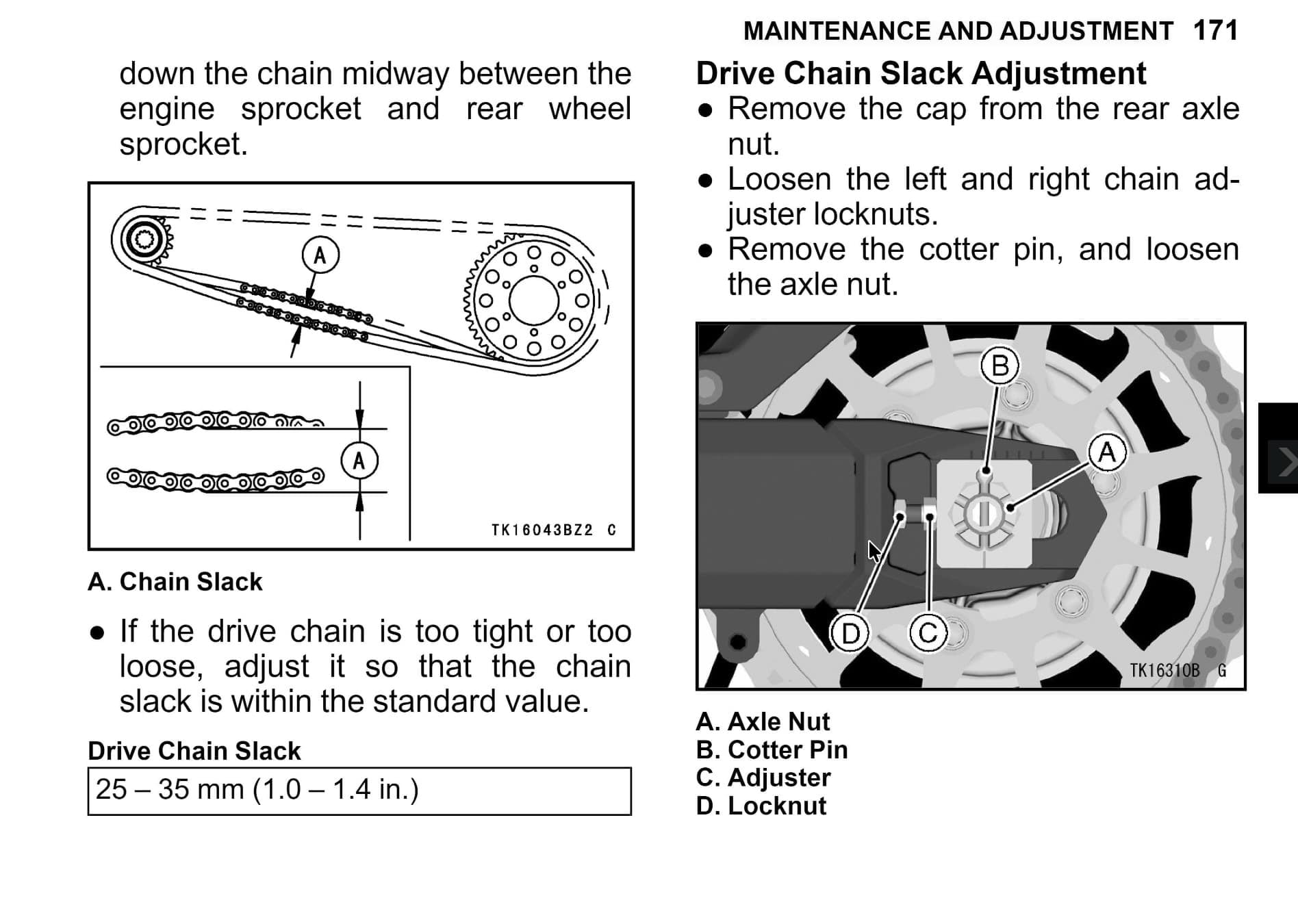
| Target chain slack | 25–35 mm (1.0–1.4 in) |
| Inspect chain and chain-guide wear | Every 12,000 km (7,600 mi) |
How to Check Chain Slack
Park the motorcycle on a level surface, in neutral, on its side stand and without luggage or another load. Rotate the rear wheel to find the tightest section of chain. At the midpoint between the sprockets, move the lower run up and down and measure its total travel.
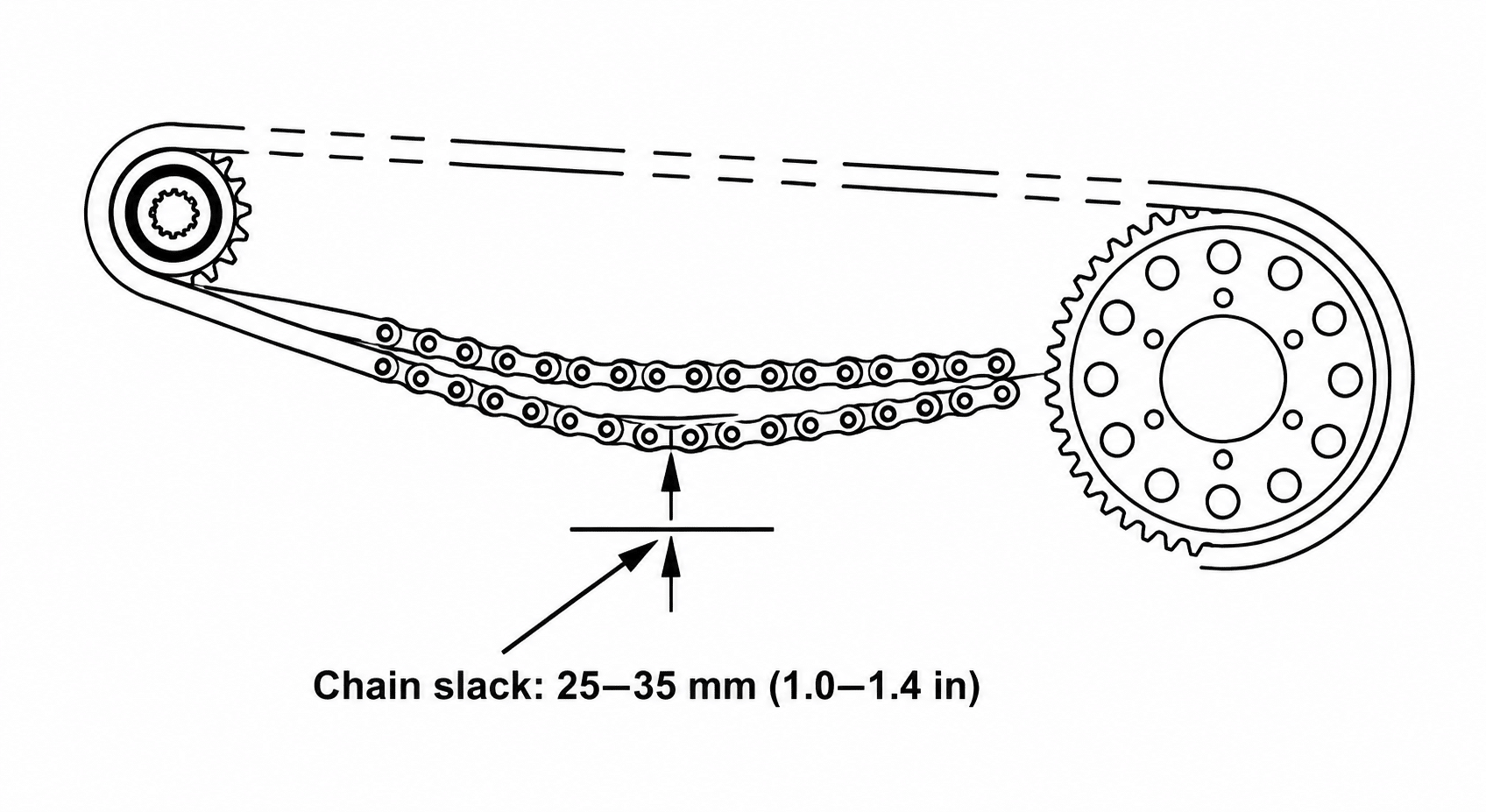
Correct chain slack: 25–35 mm (1.0–1.4 in).
How to Adjust the Chain
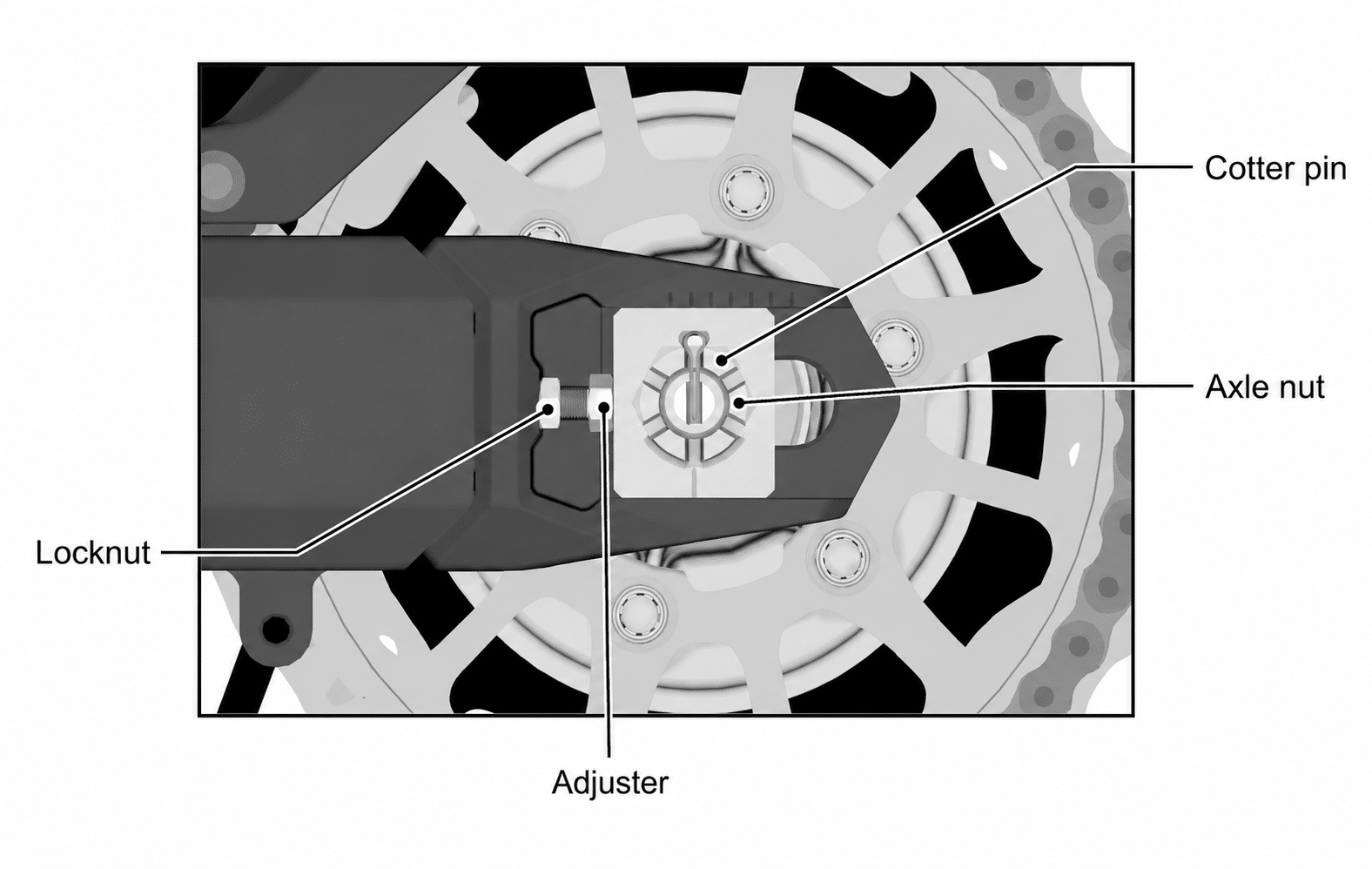
- Remove the cap from the rear axle nut.
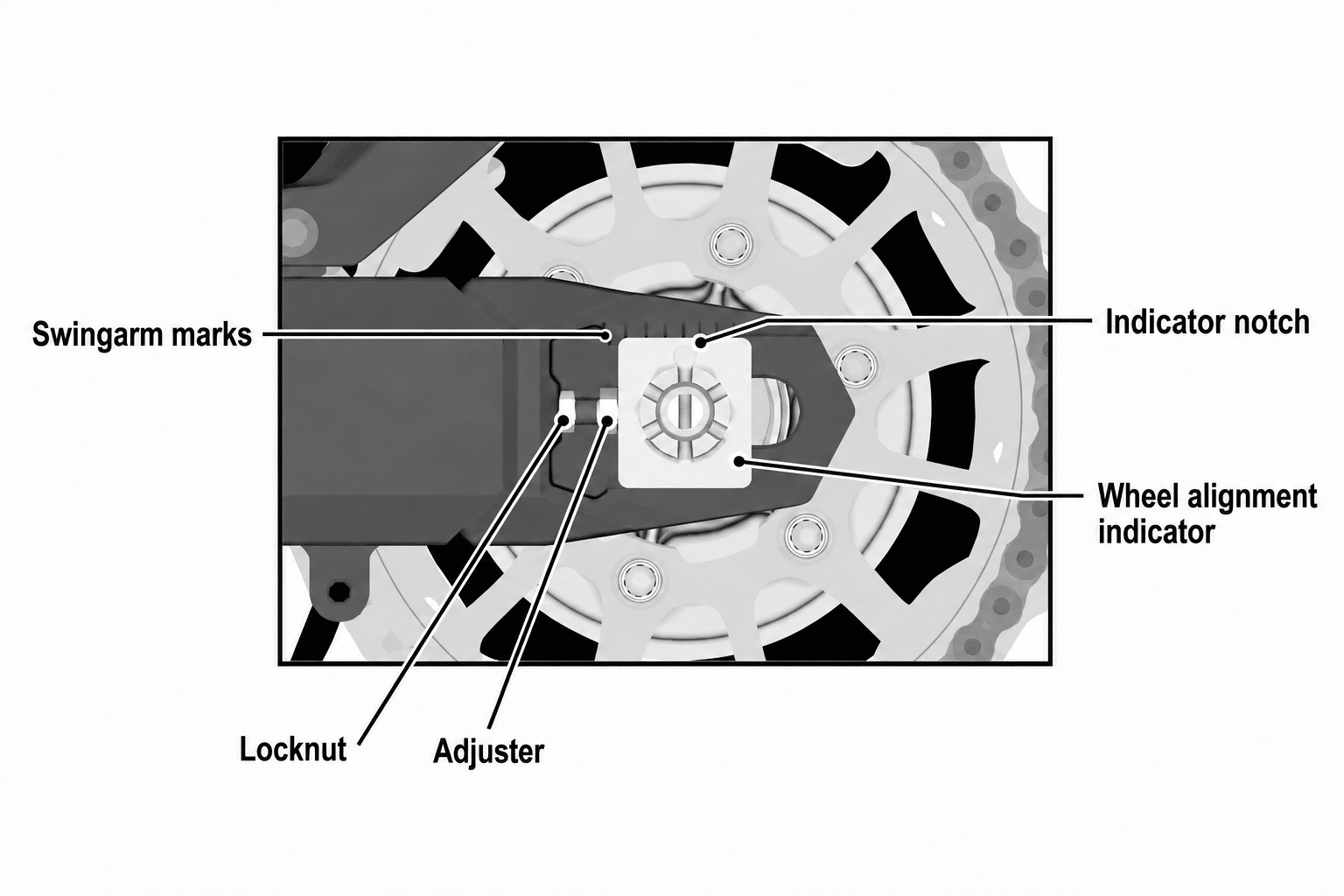
- Loosen the left and right chain-adjuster locknuts.
- Remove the cotter pin, then loosen the rear axle nut.
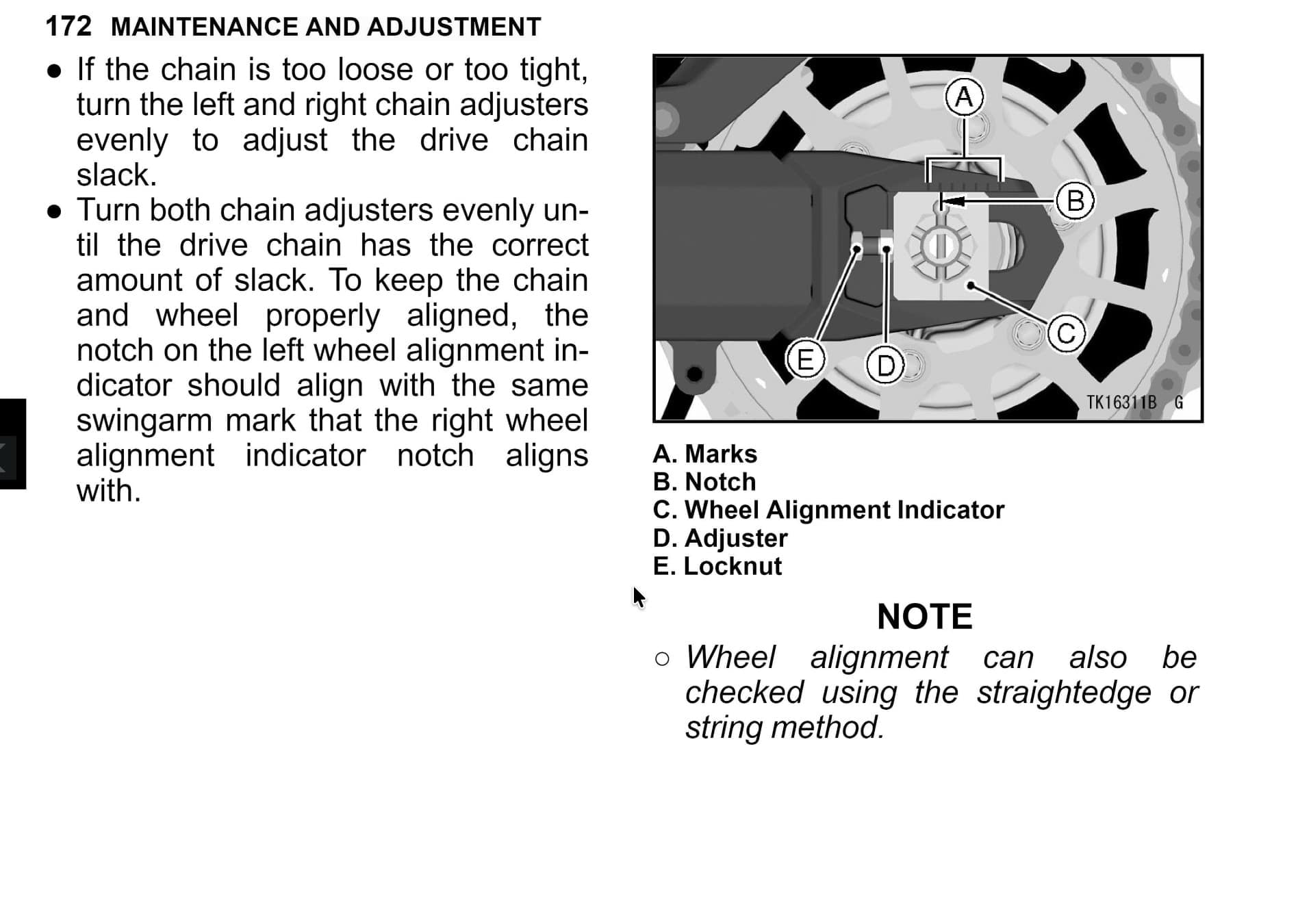
- Turn both adjusters evenly until slack is 25–35 mm (1.0–1.4 in).
- Compare the indicators on both sides. Each indicator notch must align with the same swingarm mark so the rear wheel stays straight.
- Tighten both adjuster locknuts, then tighten the axle nut to 110 N·m (81.1 lb-ft).
- Install a new cotter pin. If the nut slots do not align with the axle hole, tighten the nut clockwise to the next alignment, within 30 degrees; do not loosen it to line up the slot.
- Rotate the wheel, find the chain’s tightest point again and recheck slack. Readjust if necessary, then check rear-brake operation before riding.
Tyre Sizes and Pressures
| Wheel | Tyre size | Cold pressure |
|---|---|---|
| Front | 120/70 ZR17 M/C 58W | 250 kPa (36 psi) |
| Rear | 180/55 ZR17 M/C 73W | 290 kPa (42 psi) |
Key Tightening Torques
| Fastener | Torque |
|---|---|
| Engine-oil drain bolt | 29 N·m (21 lb-ft) |
| Engine-oil filter | 17 N·m (13 lb-ft) |
| Rear axle nut | 110 N·m (81.1 lb-ft) |
About the 2025+ Kawasaki Z900 and Z900 SE
The 2025 Z900 is a substantial update rather than a colour change to the earlier bike. Kawasaki retained the 948 cc liquid-cooled DOHC 16-valve inline-four and steel trellis-frame layout, but revised the engine’s cam profiles and intake control, changed the transmission ratios and introduced electronic throttle valves. Australian models are rated at 92.2 kW (125 PS) at 9,500 rpm and 98.6 N·m (73 lb-ft) at 7,700 rpm. Figures differ slightly in Europe and other markets.
Electronic throttle control allowed Kawasaki to add cruise control and more tightly integrated riding modes. The 2025 bike also gains a bidirectional Kawasaki Quick Shifter, KTRC traction control, selectable power modes and Kawasaki Cornering Management Function. An IMU supplies lean and acceleration data to the electronics, including the cornering-aware ABS strategy.
The cockpit changed to a 5-inch TFT display with smartphone connectivity. Turn-by-turn navigation and voice functions use Kawasaki’s RIDEOLOGY app and may require a market-specific licence or supported phone. The new generation also received revised LED lighting, sharper bodywork, metal-finish trim and a flatter, thicker seat. Compared with the 2020–2024 bike, Australian specifications show the seat rising from 820 to 830 mm while the wheelbase shortens from 1,455 to 1,450 mm.

The standard Z900 uses a 41 mm inverted fork adjustable for spring preload and rebound damping, a gas-charged rear shock with preload and rebound adjustment, and radial-mount opposed four-piston front calipers. It has the same 17 L fuel tank, 120/70 ZR17 front tyre and 180/55 ZR17 rear tyre as the SE.
The Z900 SE keeps the same engine, transmission and maintenance schedule. Its extra cost goes into the chassis hardware: Brembo M4.32 radial monobloc front calipers and Brembo 300 mm discs, an Öhlins S46 rear shock, and a fork that adds compression-damping adjustment. It also receives its own colours and graphics. USB-C power is standard on the Australian SE and an accessory on the base model.

| Feature | Z900 | Z900 SE |
|---|---|---|
| Engine and service schedule | 948 cc inline-four; shared schedule | Same engine and schedule |
| Front suspension | 41 mm inverted fork; preload and rebound adjustment | Inverted fork; preload, compression and rebound adjustment |
| Rear suspension | Gas-charged shock; preload and rebound adjustment | Öhlins S46; preload and rebound adjustment |
| Front brakes | Radial-mount opposed four-piston calipers | Brembo M4.32 monobloc calipers and Brembo 300 mm discs |
| USB-C, Australian specification | Accessory | Standard |
| Curb mass, Australian specification | 212 kg | 213 kg |
This third-generation Z900 is distinct from the 2017–2019 Z900 and 2020–2024 Z900. The retro-styled Z900RS and Z900RS Café use their own maintenance page.
References — Screenshots from the 2025 Kawasaki Z900 Owner’s Manual
This page was checked against Kawasaki’s Australian English 2025 Z900 / Z900 SE owner’s manual, publication 99815-0051, covering ZR900S and ZR900T. The original screenshots below are unaltered. The text-labelled chain diagrams above are separate reader aids derived from the chain pages.
See the official 2025 Kawasaki Z900 / Z900 SE owner’s manual and Kawasaki’s official 2025 Z900 launch summary.